15
Years in international removals
850k+
Verified customer enquiries
3
FIDI-accredited partners
Trusted International Moving Network
Accredited Relocation Specialists


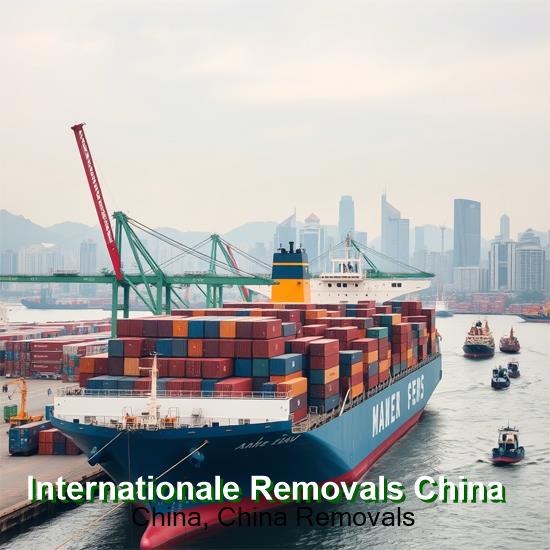
Your goods reach China by sea, by rail through Europe and Central Asia, or by air. Sea costs the least and takes the longest. Rail sits in the middle on both counts and works well for inland cities. Air suits small, urgent loads. Which one fits depends on your volume, your date and where in China you are going.
Send your move details once and we match you with one vetted moving company from our network, chosen because it handles your route and has capacity on your dates. You get one quote from a firm that can actually do the job, rather than a queue of cold calls.
China is a large country with a small number of deep water ports. A move to Shanghai or Shenzhen ends close to where the ship docks. A move to Chengdu, Xi'an or Zhengzhou needs an inland leg by road or rail after clearance, and that leg changes both the price and the timetable. This is the single biggest thing people get wrong when planning a Chinese move.
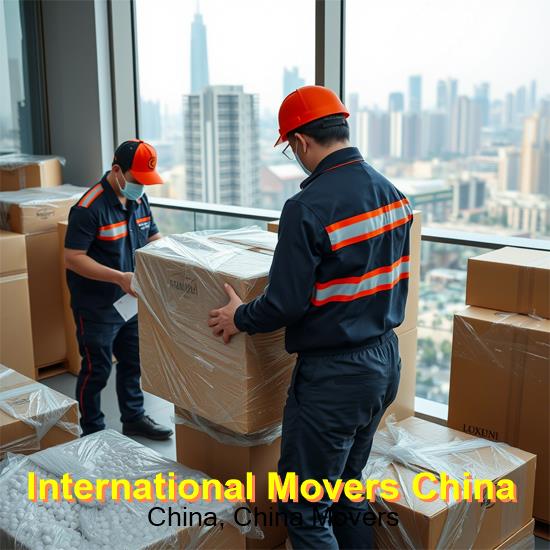
One thing to clear up before you start ringing round. A removal van and two men works fine across town, but it is the wrong tool here. Goods bound for China travel by container, by rail wagon or by air pallet, so what you need is a removal company set up for international work with the right paperwork, not a local van service. Removal services on this route are priced by cubic metre or by weight, never by the hour. China movers who do this regularly will tell you the same.
Collection address, destination city in China, rough volume, date and access notes. If you are still deciding between sea and rail, say so and it gets priced both ways.
One vetted mover from our network takes it on, picked for your route and your dates. Every firm on the list is an established international moving business, not a lead broker. If it runs out of capacity, another company in the network picks the job up.
They survey the volume, confirm the price, handle the export and import paperwork, and book the sailing or the train. No middle layer between you and the people doing the work.
Most movers will offer you sea or air and stop there. Rail is the option that gets missed, and for a lot of inland Chinese cities it is the better answer. If you are searching for international shipping to China and only finding two choices, this is why. Here is how the three compare in practice.
Container ships run from Felixstowe, Southampton and London Gateway to the big Chinese ports. Your goods travel in a shared box or a sole use box.
Freight trains run between European terminals and inland Chinese cities across Kazakhstan and Russia. Your goods cross to a European terminal first, then join the train.
Priced by weight rather than volume, which flips the usual maths. Heavy furniture becomes expensive fast. Clothes, documents and small electricals do not.
Most people heading out are going for work, for study, or to join family already there. The shipment usually leaves before or just after the person does, so the timing question is really about when your Chinese residence permit is in place.
That matters because Chinese customs relief for household goods is tied to your residence status. Sending a container ahead of the permit tends to create problems at the port. Get the permit sorted, then let the goods follow.
Volume is the other lever. Chinese flats are typically smaller than British houses, and most are let furnished or part furnished. Plenty of people ship half of what they first planned to, and are glad of it.

This route gets far less attention than it deserves. Teachers finishing contracts, engineers rotating home, families returning after a posting and students heading back after graduation all move in the same direction, and often at the same time of year.
The paperwork that matters here is Transfer of Residence relief. It lets you bring your used belongings into Great Britain without paying duty and VAT, provided you are genuinely moving your home. You apply to HMRC before the goods land and you get a reference that goes on the customs entry.
Apply early. Approval takes time, and a container sitting at Felixstowe waiting for a reference number costs money every day it sits there.
The UK is the busiest route, but plenty of moves out of China go elsewhere. Families relocating on to a new posting, graduates taking jobs abroad, and people returning to Australia, Canada or the United States after years in Shanghai or Shenzhen.
Each destination brings its own import rules. Australia and New Zealand inspect for timber pests and soil, and will fumigate or reject items that fail. The United States and Canada want a detailed valued inventory. Singapore and the Emirates have their own restricted lists. The export side from China stays broadly the same, so it is the arrival country that shapes the planning.
Whatever the destination, the cultural relics rule still applies on the way out. If you have bought older furniture, scrolls, ceramics or jade while living in China, get them assessed before packing day. Movers who handle this route regularly will raise it with you unprompted. If yours does not, ask.
Use these when the goods are leaving China for another country.
These are planning ranges to help you budget, not offers and not fixed prices. Your own figure comes after the volume is checked. Packers and movers price this work by cubic metre or by weight, so two identical looking flats can come out very differently once access, packing and destination city are taken into account.
A student going out, a single person, or a few cases beyond the airline allowance.
Plan for around £250 to £900
Priced per box or per cubic metre. Sea is cheapest, air is quicker and costs more.
A one or two bedroom flat, or the contents of a couple of rooms plus some furniture.
Plan for around £1,200 to £3,500
You pay for the space you fill. Dates need to be flexible, because the box waits until it is full.
A family home, higher value contents, or a move where the date cannot slip.
Plan for around £3,500 to £9,000
The whole box is yours. Fewer handling stages, tighter timing, higher price.
Tell us the route once. We match you with your vetted mover, which means one team handles everything from the packing to the delivery.
It is free, with no obligation. Get a quote today and hold your dates.
Send your move detailsCall 07551 855 064 or +447551855064. Message us on WhatsApp.
China is stricter than most destinations on what may enter and what may leave. The rules change, so treat this as an orientation and check the current position with Chinese customs and with your mover before anything is loaded.
China inspects harder than most. Expect problems with:
This one catches people who have lived in China for years.
China handles most of its container traffic through a handful of very large ports. Which one your goods use decides how far the lorry drives afterwards.
Freight trains between Europe and China land directly inland. For cities a long way from the coast, that removes days of driving and a chunk of cost.
Worth checking: rail services start, stop and reroute more often than shipping lines. Ask whether the service is running before you plan around it.
Everything on this page applies to the mainland. Residence permit rules, the cultural relics restriction, the vehicle ban and the inspection regime are all national. What changes between cities is the port, the length of the road leg and how busy the local clearance office is.
Macau is a separate customs territory with its own rules and its own import procedure. Goods usually arrive through Hong Kong or a nearby mainland port and cross by road or ferry. It should be quoted as its own destination, not as a mainland Chinese city.
Hong Kong is also a separate customs territory and generally a simpler destination than the mainland. There is no residence permit condition on household goods in the same way, and the port is one of the most efficient anywhere. It has its own pages.
If you are dealing with a Chinese estate agent, a compound management office or a local firm, some of these will come up. Knowing them saves a certain amount of confusion: 国际搬家 (guoji banjia) for an international move, 海运 (haiyun) for sea freight, 空运 (kongyun) for air freight, 铁运 (tieyun) for rail freight, 集装箱 (jizhuangxiang) for a container, and 清关 (qingguan) for customs clearance. Your residence permit is 居留证 (juliuzheng), and you will be asked for it more than once.
Moving between countries usually means moving money too: a deposit on a Chinese flat, proceeds from a UK house sale, or salary coming back the other way. We have helped customers with currency exchange in any currency through trusted partners for many years, and our partners can help with the money side of your move. Mention it on the form and it gets included.
Experts in currency exchange
No hidden fees
5 star consumer ratings
Competitive exchange rate
International Removals Companies is run by DATACONTEXT (UK) LTD. We are not a removal firm and we do not own lorries. What we do is match your enquiry to one vetted mover from the AGM Group network that genuinely covers your route. Searchers arrive here typing all sorts of things: international movers, packers and movers, shipping to China, relocation services. They all mean the same job, and it is the job our network does.
The reason that helps on Chinese moves in particular is that not every international firm handles China well. Chinese customs paperwork, the cultural relics rule and the rail option all need someone who has done it before. Matching gets your enquiry in front of a firm that has, rather than one that will work it out as it goes.
Every company in the network holds recognised accreditation: FIDI FAIM certification, BAR Overseas membership, and membership of IAM, EUROMOVERS and FEDEMAC. You get one quote from one firm, not a scramble of calls from six.
Pick your destination for the detail that actually matters there: which port the container clears, how far inland the road leg runs, whether a train lands nearby, and what the access is like when the lorry turns up.
Answered in full on the page so you can read them without opening anything.
Sea freight is usually the slowest and cheapest. Allow roughly six to ten weeks door to door, depending on the Chinese city and how quickly customs clears the shipment. Rail from a European terminal into inland China is faster, often four to six weeks door to door. Air freight is normally one to two weeks. Your moving company confirms the timing for your own address.
Boxes and excess baggage usually sit in the lowest band. Shared container space costs more. A sole use container costs the most because the box is reserved for your goods alone. The final figure depends on cubic metres, which Chinese city, packing, access at both ends, insurance and the date you need. The quote is confirmed after the volume is checked.
A shared container, often called LCL or less than container load, means your goods travel alongside other shipments in the same box. You pay for the space you use. A sole use container, often called FCL or full container load, means the whole twenty foot or forty foot box is yours. Shared space suits smaller loads and flexible dates. A sole use container suits full homes and fixed dates.
Relief is possible but it is conditional. Chinese customs generally expects the person to hold a residence permit, and the household goods to arrive as a single shipment within a set window after arrival. The goods must be used personal effects in reasonable quantity, not new stock or trade goods. A full valued inventory is required. Check the current rules with Chinese customs before the shipment is booked.
For almost everyone the answer is no. China does not allow private individuals to import a used car as part of a household move. Narrow exceptions exist for certain diplomatic and official categories. Plan on selling the vehicle before you go. Motorbikes and mopeds face the same restriction.
China restricts more than most destinations. Printed material, films and recorded media can be inspected and held. Drones, satellite receiving equipment, radio transmitters, plants, seeds, soil, untreated wood, most meat and dairy, and larger quantities of medicine all cause problems. Weapons, ammunition and imitation firearms are prohibited. Declare anything unusual before the container is loaded rather than after.
Only with the right certification. Items made before 1949 are treated as cultural relics and their export is controlled. Approved items carry an official seal and an export certificate. Anything without that paperwork can be seized at the port. Have older furniture, ceramics, scrolls and jade assessed well before packing day, not on the morning the lorry arrives.
You will normally claim Transfer of Residence relief, which lets you bring used personal belongings into Great Britain without paying duty and VAT when you move your home here. You apply to HMRC before the goods arrive and you receive a reference number that goes on the customs entry. You also need a full inventory. Start the application early, because approval is not instant.
No. Moves leaving China for Australia, the United States, Canada, New Zealand, Singapore, the United Arab Emirates, Ireland and several European countries are also covered. Send the collection city in China and the delivery country, and coverage for that route is checked before anything is quoted.
Send the collection address, the Chinese city, your rough volume and your date. A vetted mover from our network checks the route, the paperwork and the access, then comes back to you with the price. One set of details, one quote, no queue of cold calls.
Send your move detailsWe match international moving enquiries with vetted moving companies in the AGM Group network, each holding FIDI FAIM certification and BAR Overseas membership.
Use this page to get your Chinese move clear in your head, then speak directly to the mover we match you with before you book anything.