15
Years in international removals
850k+
Verified customer enquiries
3
FIDI-accredited partners
Trusted International Moving Network
Accredited Relocation Specialists


Freight trains run between European terminals and inland China across Kazakhstan and Russia, and for a good number of Chinese cities they beat sea freight on time by a wide margin. Almost no UK movers offer this without being asked, and it can take weeks off a relocation.
We match you with one vetted mover from our network that can actually arrange it, because not every firm can. Rail is a specialism rather than a standard product in household moving.
International movers who quote rail will tell you the case is strongest for cities a long way from the coast. A train lands your goods inland. A ship lands them at a port that may be fifteen hundred kilometres from where you are going.
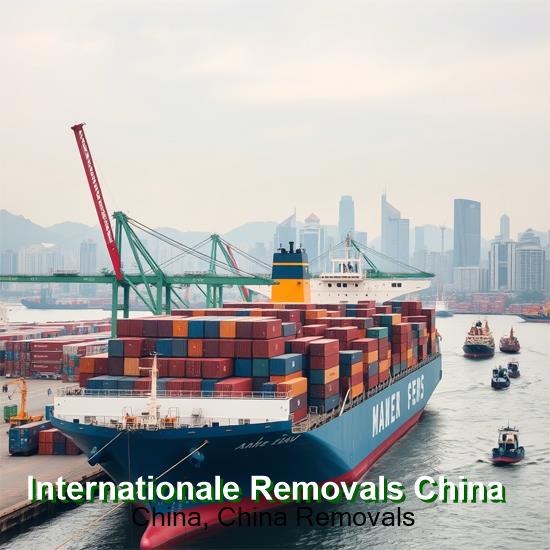
The network has grown considerably over the last decade and now reaches a substantial list of Chinese cities. The ones that matter most for household moves are the inland ones, because those are where sea freight is at its weakest.
The strongest cases are Chongqing, Chengdu, Xi'an, Zhengzhou, Wuhan and Kunming. Every one of these sits hundreds or thousands of kilometres from a container port, so a sea shipment carries an enormous domestic road leg that rail removes entirely.
Also served are Yiwu, Changsha, Hefei, Jinan, Shenyang and Harbin. Harbin in particular is worth mentioning, since it sits roughly nine hundred kilometres from Dalian and rail removes all of it.
Less compelling are the coastal cities. Shanghai, Ningbo, Shenzhen and Qingdao all have excellent sea connections and a short road leg at the far end, so rail buys you weeks but not much convenience.
On the European side, goods leave the UK for a continental terminal and join the train there. Common terminals include Duisburg, Hamburg and points in Poland. Your mover arranges the leg from your door to whichever terminal the service uses.
On the route itself. Trains cross Kazakhstan and Russia, and there is a gauge change at the border where containers are transferred between rolling stock. It is a routine operation and it is already built into the transit times quoted.
Rail sits between sea and air on both price and speed, which sounds like a compromise and often is not. For an inland city the honest comparison includes the storage and the temporary accommodation you avoid, and that narrows the gap considerably.
Baseline
Add a long road leg for any inland city, plus a transhipment.
Roughly 1.5 to 2 times sea
Lands inland. Removes the domestic road leg entirely.
Several times sea
Priced by weight, so unsuitable for furniture at any distance.
Tell us your Chinese destination and your date. If rail serves that city, we will get it priced against sea so you can see both.
We match you with your vetted mover, which means one team handles the whole relocation. It is free, with no obligation. Get a quote today and hold your dates.
Send your move detailsCall 07551 855 064 or +447551855064. Message us on WhatsApp.
A few things about rail that people do not think to ask.
Temperature. The route crosses Central Asia and Siberia, where winter temperatures fall a long way below freezing and summers are hot. Standard containers are not temperature controlled. Liquids should be drained, wine and cosmetics are a poor idea, and anything with a battery or an aerosol needs checking. Wooden furniture and instruments benefit from proper packing on this route more than they would at sea.
Border formalities. The train crosses several national borders and there is a gauge change where containers move between rolling stock. This is normal and factored into the timings, but it does mean more administrative touch points than a ship calling at two ports.
Schedule reliability. Rail services are commercial operations whose frequencies and routings change. A service that ran weekly last year may run fortnightly this year, or use a different terminal. Confirm the specific service for your window rather than working from general information, including anything on this page.
Direction. Rail works westbound as well. For a family leaving an inland Chinese city, a container going by sea has to reach the coast first, which is often most of a fortnight before it has even left the country. The train starts where you are.
Combining modes. A common approach is rail for the bulk and air for the first fortnight's essentials. It gets you living normally quickly without paying air rates on furniture.
Rail is worth pricing against both sea and air rather than assumed to be a premium option.
A move usually means moving money too, whether that is a deposit on a Chinese flat or funds coming back the other way. We have helped customers with currency exchange in any currency through trusted partners for many years, and our partners can help with the money side of your move. Mention it on the form and it gets included.
Experts in currency exchange
No hidden fees
5 star consumer ratings
Competitive exchange rate
Roughly four to six weeks door to door. Your goods travel from your address to a continental European terminal, join the train, cross Central Asia and are unloaded at an inland Chinese city. That compares with eight to eleven weeks for a sea shipment to a comparable inland destination.
The strongest cases are Chongqing, Chengdu, Xi'an, Zhengzhou, Wuhan and Kunming, all of which sit a long way from any port. Yiwu, Changsha, Hefei, Jinan, Shenyang and Harbin are also served. For coastal cities rail buys weeks but little convenience.
Per cubic metre, yes, usually one and a half to two times. The honest comparison includes what you avoid: a domestic road leg of several hundred kilometres, a transhipment stage, and weeks of temporary accommodation. For an inland city that narrows the gap considerably.
Standard ones are not, and the route crosses Central Asia and Siberia where winters are severe. Liquids should be drained, wine and cosmetics are a poor idea, and wooden furniture and instruments benefit from better packing than a sea shipment would need.
Containers are transferred between rolling stock because the track gauge changes. It is a routine operation already built into the quoted transit times, though it does mean more administrative touch points than a ship calling at two ports.
Yes, and for an inland city it is often the better direction to use it. A container leaving Chongqing or Harbin by sea has to reach the coast first, which can be most of a fortnight before it has left the country. The train starts where you are.
They run commercially and their frequencies and routings do change. A service running weekly one year may run fortnightly the next, or use a different terminal. Confirm the specific service for your window rather than relying on general information.
It depends on the service. Duisburg, Hamburg and terminals in Poland are among the common departure points. Your mover arranges the leg from your UK address to whichever terminal the booked service uses, and that leg is included in the transit time.
Yes, and it is a sensible approach. Send the first fortnight's essentials by air and the bulk by rail. You are living normally within a couple of weeks without paying air rates on furniture, and the total often comes out below an all air shipment.
Send your collection address, your Chinese destination, a rough idea of the volume and your date. A vetted mover from our network checks the route, the paperwork and the access, then comes back to you with the price.
Send your move detailsWe match international moving enquiries with vetted moving companies in the AGM Group network, each holding FIDI FAIM certification and BAR Overseas membership.
We are not a removal firm ourselves. We find you the one that suits your route, and you deal with them directly from there.