15
Years in international removals
850k+
Verified customer enquiries
3
FIDI-accredited partners
Trusted International Moving Network
Accredited Relocation Specialists


Fuzhou sends more people abroad than almost any Chinese city its size, and has done for well over a century. The counties around it are the origin of a very large share of Fujianese emigration to North America, which means the busiest moves here are not people arriving but people coming home.
One vetted mover from our network takes the job, matched for Fujian coverage. The local trade is used to family shipments moving in unusual directions, which is genuinely useful if your route is not a European one.
The city sits fifty kilometres up the Min River from the sea. Container traffic uses the Mawei terminal downstream and the larger facilities at Fuqing, and the drive into the city is short from either.
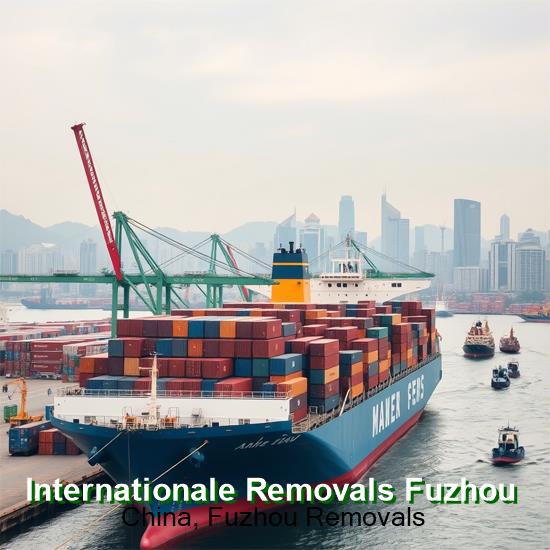
Fuzhou is a river city rather than a coastal one. It sits about fifty kilometres upstream on the Min, which historically made it a safe harbour and now means the container terminals are downstream rather than in the city itself.
Mawei, in the east of the municipality, is the closest and handles a good deal of the regional traffic. The larger deep sea facilities sit further south around Fuqing, which is also one of the main emigration counties, so the two facts sit next to each other on the map in a way that is not coincidental.
Either way the road leg into central Fuqing or Gulou is under an hour. Fujian's expressway network along the coast is good and the terrain, though mountainous inland, is manageable along the seaboard.
Xiamen, further south, is the province's larger container port and occasionally offers a better sailing date. The extra driving is a couple of hours, so it is worth asking about rather than assuming Fuzhou's own terminals are automatic.
Typhoon exposure runs from roughly June to September and Fujian catches storms directly. The river position gives Fuzhou a degree of shelter that Xiamen and Wenzhou do not have, but sailings still get held.

Fuzhou is greener and lower rise than most Chinese provincial capitals, and it delivers reasonably well as a result.
Gulou, the central district, holds the government offices, the main commercial streets and a good deal of older residential stock alongside newer towers. Access is generally fine, though the older blocks near the centre have smaller lifts.
Within Gulou sits Three Lanes and Seven Alleys, and it deserves its own note. It is a preserved district of Ming and Qing courtyard housing on a grid of narrow lanes, largely pedestrianised and under conservation protection. A vehicle cannot enter most of it. Very few people live there permanently now, but if your address is in or adjoining it, everything comes in on foot.
Cangshan, south of the river, holds the universities and a large amount of newer residential development. Wide roads, modern compounds, working lifts. This and Mawei are the easy deliveries.
Mawei, in the east, is the development zone built around the port and industry. Planned roads, newer housing, straightforward access.
Taijiang, along the north bank, is the older commercial district. Dense, busy, mid rise, with tighter streets and parking that needs arranging.
The banyan trees are worth knowing about. Fuzhou is called the banyan city and the old ones are protected, with canopies that meet across some older roads. On a handful of streets that limits the height of a vehicle that can pass, in the same way Nanjing's plane trees do, and a high sided lorry occasionally has to approach from a different direction.
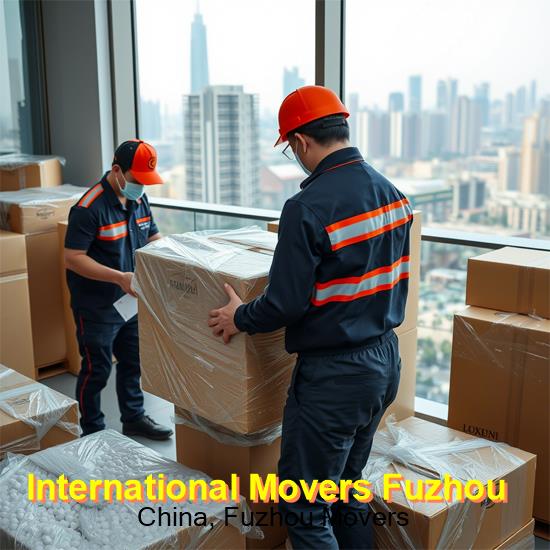
Fuzhou prices at the lower end for a provincial capital, because the terminals are close and the city is not difficult to drive in. Where a quote climbs is heritage access and, in summer, weather delay.
Plan for around £250 to £1,000
Students, single postings and family shipments returning from abroad.
Plan for around £1,200 to £3,200
Apartment moves into Cangshan or newer Gulou stock.
Plan for around £3,400 to £8,200
Full household moves, generally into Cangshan or the Mawei zone.
Tell us the district and whether the address is inside the conservation area. That decides whether a vehicle can reach the door.
We match you with your vetted mover, which means one team handles everything. It is free, with no obligation. Get a relocation quote today and hold your dates.
Send your move detailsCall 07551 855 064 or +447551855064. Message us on WhatsApp.
Clearance happens at Mawei or the Fuqing terminals. You need a valid residence permit, a full valued inventory and your passport details. Fujian's ports handle a great deal of family and diaspora shipping, so personal effects are ordinary work here rather than an exception.
The national rules are the same across mainland China, so the detail on permits, restricted goods and the cultural relics rule is set out in full on the China removals and shipping page. Read that before you start packing, particularly the section on items made before 1949.
More outbound traffic from Fuzhou heads for North America than for Europe, and by a considerable margin. The emigration counties around the city have been sending people to the United States and Canada for generations, and family shipments run constantly in both directions.
Whatever the destination, the export side is the same. For Britain, apply for Transfer of Residence relief with HMRC before the goods leave. Fujian has a long tradition in lacquer, stone carving and tea ware, most of it modern and perfectly exportable. Anything from before 1949 needs an export certificate.
A move usually means moving money too, whether that is a deposit on a Fuzhou flat or funds coming back the other way. We have helped customers with currency exchange in any currency through trusted partners for many years, and our partners can help with the money side of your move. Mention it on the form and it gets included.
Experts in currency exchange
No hidden fees
5 star consumer ratings
Competitive exchange rate
The Fujian and eastern Guangdong coast is a chain of emigration ports, and family shipping between them and overseas communities is constant.
For the full picture on routes, sea freight, rail freight, costs and Chinese customs, start at the China shipping and moving page.
Mawei, in the east of the municipality, handles a good deal of regional traffic, and the larger deep sea facilities sit further south around Fuqing. The road leg into the city is under an hour from either. Xiamen further south is worth asking about if its sailing dates suit you better.
It sits about fifty kilometres upstream on the Min, which historically made it a safe harbour. The practical effect today is that the container terminals are downstream rather than in the city, and that the river position gives some shelter from weather that the exposed coastal ports do not have.
Generally not. Three Lanes and Seven Alleys is a preserved district of Ming and Qing courtyard housing on narrow lanes, largely pedestrianised and under conservation protection. Vehicles cannot enter most of it, so goods are carried in on foot.
Fuzhou is known as the banyan city and the old trees are protected, with canopies meeting across some older roads. On a handful of streets that limits the height of a vehicle that can pass, so a high sided lorry occasionally has to approach from a different direction.
Cangshan, south of the river, or the Mawei development zone in the east. Both have wide roads, modern compounds and working lifts. Gulou, the central district, is generally fine except in the older stock and the conservation area.
Six to eight weeks door to door by sea. That is roughly thirty five days sailing, clearance at Mawei or Fuqing, and a short road leg. Air freight into Changle takes about ten to twelve days and is priced by weight rather than volume.
Yes, and those are among the busiest routes out of the city. The counties around Fuzhou have been sending people to North America for generations and family shipments run constantly in both directions. Give the destination country when you enquire and coverage is checked before pricing.
Yes, roughly June to September, though the upriver position offers some shelter that Xiamen and Wenzhou do not have. Sailings still get held and a delayed container may need short term storage. Spring and late autumn run more predictably.
A valid residence permit, a complete inventory with values and your passport details. The goods should be used personal effects arriving as one shipment within the permitted window after you enter the country. Fujian's ports handle personal effects as ordinary work.
Send your collection address, your Fuzhou district, a rough idea of the volume and your date. A vetted mover from our network checks the route, the access and the paperwork, then comes back to you with the price.
Send your move detailsWe match international moving enquiries with vetted moving companies in the AGM Group network, each holding FIDI FAIM certification and BAR Overseas membership.
We are not a removal firm ourselves. We find you the one that suits your route, and you deal with them directly from there.