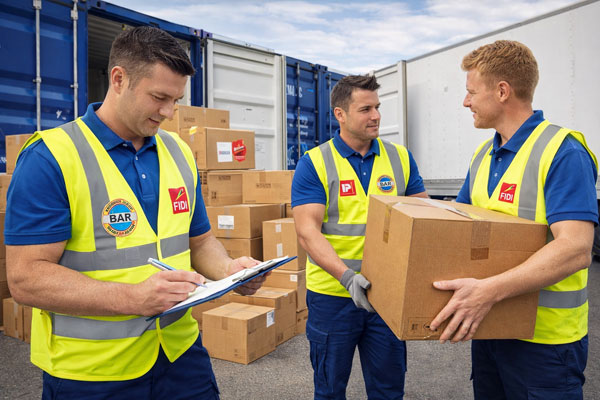
We are a free enquiry service, not a removal company. We do not own vans, we do not pack boxes and we never touch your furniture. What we do is check moving companies, then match your enquiry to one firm from the AGM Group network that already runs your route.
That distinction matters when you are choosing who to trust. A comparison site sells your details to whoever pays for them. A removal firm will always tell you it is the right firm. We sit in between: our only job is deciding which accredited company suits a particular move, so one firm is accountable from collection to delivery and your phone does not ring for a fortnight.
The service runs in both directions. Most enquiries are UK households moving abroad, but we also match returning residents shipping back into the UK, and expat families moving between two countries that are neither the UK. If we have no suitable firm for a route, we say so rather than passing you to a company that has never run it.
Vetting happens before a firm joins the network, not after a complaint. Every company is checked against the same five things, and a failure on any one of them is a rejection rather than a note on file.
We check the certificate directly with the issuing body, not the logo on the company website. An expired FIDI FAIM certificate looks identical to a current one in a footer image. Accreditation numbers are recorded with the date we verified them.
Filed accounts at Companies House, plus any charges, county court judgments or late filing history. This is the check that matters most in practice, because the way people lose their belongings is almost never theft. It is a firm going under with a container already at sea.
We look at the policy document and the limit, not the claim that a firm is insured. Cover written for UK domestic work does not extend to a container crossing an ocean, and that gap only appears when a claim is made.
A firm that runs weekly groupage to Spain is not automatically the right firm for a move to New Zealand. We record which routes each company actually operates rather than which ones it will accept.
Held claims, unresolved disputes and pattern complaints through the accrediting bodies. One bad month is not disqualifying. A pattern is.
You can read the full method on our transparency statement, including what would cause us to remove a firm that is already in the network.
Removal firms list a lot of logos and most people have no way of telling which ones mean anything. Here is what each one is, so you can judge any quote you receive, including one that did not come through us.
The strongest of the five, and the one to look for first. It carries an independent Ernst and Young audit against more than 200 criteria, repeated every three years, covering finances, insurance, facilities and handling procedures. A firm cannot self declare it.
The British Association of Removers overseas division. It requires an advance payment guarantee, which means your deposit is protected if the firm fails before your move happens. That is a different protection from goods in transit cover and the two are often confused.
The International Association of Movers. Broad global membership, useful mainly for destination handling, because it indicates a firm has working relationships with agents at the other end.
European networks. Both matter for road freight moves within Europe, where the collecting firm and the delivering firm are often different companies and the handover is where things go wrong.
Between them, the movers in our network hold FIDI FAIM Certified, BAR Overseas, IAM, EUROMOVERS, FEDEMAC. AGM Group is the parent network.
Cost is driven by volume first and distance second. The figures below are the ranges we see across the network for a door to door move. They are indicative, and a surveyed quote will always differ.
10 to 15m3
Part load: £900 to £1,800
Dedicated: £2,200 to £3,500
20 to 25m3
Part load: £1,600 to £2,800
Dedicated: £3,200 to £4,800
30 to 35m3
Part load: £2,400 to £3,800
Dedicated: £4,500 to £6,500
50 to 60m3
Part load: Not suitable
Dedicated: £7,000 to £11,000
Two things move these numbers more than anything else. Timing, because May to September is peak season and capacity tightens. And access at both ends, because a shuttle vehicle for a narrow street or a high floor without a lift is charged separately and is the most common reason a final invoice differs from the original quote. Ask about access before you accept any price.
A cheaper quote usually means less insurance rather than a better deal. That is worth checking line by line. There is more detail on what an international move costs.
Price ranges reviewed August 2026. Next review August 2027.
The shipping method is the single biggest cost decision, and it is usually settled by volume rather than preference.
Sea freight is the default for anything outside Europe. Shared container, also called groupage or part load, means your goods travel with other households and you pay for the space you use. It is the cheapest option and the slowest, because the container waits until it is full. A full container is faster and fixed price, and becomes worthwhile at roughly 25m3 upwards.
Road freight is the default within Europe. Door to door with no port handling, which removes the two points where damage most often happens. Transit to Spain or France is typically under a week.
Air freight is priced by weight rather than volume, which makes it expensive for furniture and reasonable for documents, laptops and the box of things you need in the first fortnight. Most people who use it send a small air consignment alongside a sea shipment rather than instead of one.
Customs paperwork sits underneath all three, and getting it wrong causes storage charges rather than delays alone. Our customs documentation checklist covers what you need to have ready before anything is collected.
Packing is the part people most often decide on price alone, and it is the part that decides whether an insurance claim pays out. There are three levels, and the difference matters more than most quotes explain.
A crew arrives the day before or the morning of collection and wraps everything, room by room, listing each carton as they go. It costs the most and it is the only level where the mover carries responsibility for how your things were packed. For a whole household it is usually a day's work for two or three people.
The crew handles the fragile items, the kitchen, artwork and anything awkward, and you do the books, clothes and linen. This is what most families choose. Agree in writing which rooms are yours and which are theirs, because that line is where disputes start.
You pack, they load. Cheapest, and the one to think hardest about, because goods in transit cover usually excludes damage to anything the owner packed themselves. If a self-packed carton of glassware arrives broken, that is normally your loss regardless of how careful the mover was.
Household goods heading overseas sit in a container for weeks, through temperature and humidity swings a domestic move never sees. Export wrapping uses double wall cartons, moisture barriers and proper tissue rather than newspaper, which transfers ink onto upholstery and pale wood in a damp container. A firm that packs your international move the way it packs a local one is the wrong firm.
Marble tops, glass, large mirrors, framed artwork and chandeliers get a timber crate built to size, usually on site on the day. Ask whether crating is in the quote or charged as an extra, because it is a common line to appear later.
Every carton is numbered and its contents listed. That single document does two jobs: it is what customs at the far end wants to see, and it is the schedule any insurance claim is settled against. If it is vague, both jobs get harder. Check it before you sign.
Passports, visas, birth and marriage certificates, medication, laptops, jewellery, keys and anything you need in the first fortnight. These travel with you. A shared container can sit at the port for weeks and nobody can open it to retrieve one box.
Unpacking at the far end is usually a separate line on the quote, along with taking the empty cartons away. Worth deciding at quote stage rather than on delivery day.
Moving house abroad usually means moving money abroad, and a high street bank transfer is rarely the best way to do it. Currency exchange is included in what we offer, through trusted partners, alongside the mover match.
Coverage follows where the network actually runs departures, so the busier routes have more frequent sailings and shorter waits for a part load to fill.
Barcelona, Madrid, Valencia and the costas. Weekly road departures, so part loads fill quickly.
Paris, Lyon, Nice. Road freight throughout, typically three to five days door to door.
Zurich, Geneva, Basel. Non-EU customs clearance applies, so the inventory has to be exact.
Rome, Milan, Florence. Two to three weeks, with historic centre access often needing a shuttle.
Berlin, Munich, Hamburg. Anmeldung registration at the far end affects delivery timing.
Amsterdam, Rotterdam, The Hague. Three to five days by road. Canal house access needs planning.
Brussels, Antwerp, Ghent. Short road transit and frequent departures.
Copenhagen, Aarhus, Odense. No passenger ferry from the UK, so road or freight ferry. Customs through Toldstyrelsen.
Sydney, Melbourne, Perth. Sea freight only, and quarantine inspection applies to anything wooden or outdoor.
Toronto, Vancouver, Montreal. Winter port closures affect eastern routes between January and March.
New York, Florida, California. ISF filing is required before the vessel sails, not on arrival.
Cape Town, Johannesburg, Durban. Sea and air freight, with customs support at destination.
Auckland, Wellington, Christchurch. Biosecurity inspection is stricter than most people expect.
Dublin, Cork, Galway. Ferry crossing, and C&E 1076 relief applies for transfer of residence.
No. We are an enquiry matching service. The move is carried out by the accredited company we match you with, and your contract is with that company, not with us.
Because the alternative is your details going to ten firms and your phone ringing for two weeks. We look at the route and the volume and send the enquiry to the firm best set up for it. If the price does not suit you, tell us and we will look again.
Nothing. There is no fee to the person moving. The network funds the service.
Europe by road is usually one to two weeks door to door. Sea freight outside Europe runs four to eight weeks, and a shared container sits at the longer end because it waits to fill. Air freight is days rather than weeks and costs several times more.
Goods in transit cover comes as standard from accredited firms, but the limit varies and it is worth reading. Full replacement value cover costs more and is usually the right choice for a whole household. Self packing often voids cover on the items you packed yourself, which catches people out.
The matched mover prepares and submits it. You supply passports, visas and the inventory. Our customs checklist sets out what to have ready.
You claim against the mover, and accredited firms work to the claims procedure of their accrediting body. If a firm in the network is not dealing with a claim properly, tell us, because that goes into the record we use to decide whether it stays.
Yes. Returning residents and inbound expat moves are a regular part of what we handle, including transfer of residence relief on import.
Send the collection town, the delivery town, a rough idea of the volume and when you want to move. We check which company in the network runs that route and pass the enquiry to one of them. They contact you to arrange a survey and confirm a price. There is no fee to you, and no obligation until you accept a quote.
If you would rather talk it through first, call or message. We can tell you whether it is a route we cover before you fill in anything.
Movers in the network hold FIDI FAIM Certified, BAR Overseas, IAM, EUROMOVERS, FEDEMAC. We verify each accreditation with the issuing body before a firm joins.