15
Years in international removals
850k+
Verified customer enquiries
3
FIDI-accredited partners
Trusted International Moving Network
Accredited Relocation Specialists


Dongguan has no city centre. It is a municipality of thirty two towns, each with its own industry and its own character, spread across the ground between Guangzhou and Shenzhen. Telling a mover you are moving to Dongguan is not enough information to price anything.
One vetted mover from our network takes it on, matched for delta coverage. The question they should ask you first is which town, because the difference between Songshan Lake and a factory town half an hour away is substantial in access, housing and drive time.
Containers clear at Nansha, across the estuary, or at Shenzhen's terminals to the south. Which is closer depends entirely on which town you are heading for, and the two answers can differ by well over an hour.
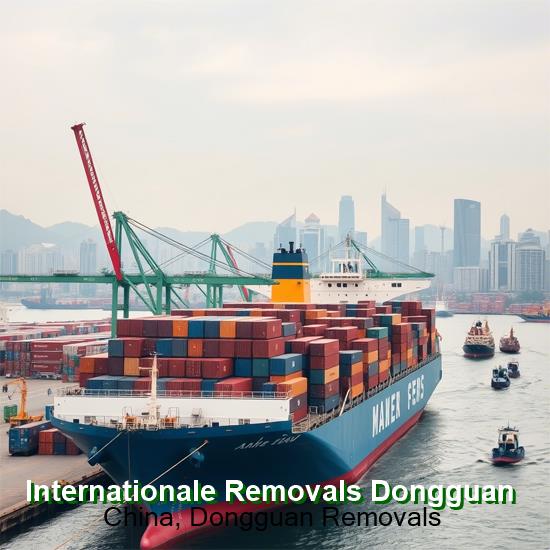
Dongguan sits in the middle of the delta with a major port on either side of it, and no obvious default.
Nansha, across the estuary to the west, is reached by the Humen and Nansha bridges. For towns in the west and north of the municipality, Humen and Chang'an among them, it is usually the shorter run.
Shenzhen, to the south, has Yantian in the east and Shekou in the west. For towns in the south of Dongguan, particularly those close to the Shenzhen boundary, it can be considerably quicker.
The difference is not trivial. A container landing at the wrong terminal for your town can add an hour and a half each way, and where a compound restricts delivery hours that can push the job to a second day. It is the single most common reason a Dongguan delivery costs more than the quote suggested.
Humen, in the south west, has its own river port. It handles coastal and feeder traffic and occasionally appears on a booking, though a household shipment from Europe will normally come through Nansha or Shenzhen.
The polycentric layout has one advantage worth mentioning. Because the towns are spread out, roads between them are wide and built for lorries carrying manufactured goods. Once the container is in the right part of the municipality, the last few kilometres are usually easy.

The thirty two towns are not interchangeable and it is worth knowing which kind yours is.
Songshan Lake is the planned high technology district in the centre of the municipality, built around a reservoir and home to a large technology campus. It holds most of the modern expatriate housing, international schooling within reach, and compounds designed with vehicle access, service lifts and space to unload. It is by a considerable margin the easiest delivery in Dongguan and where most people reading this will be heading.
Nancheng and Dongcheng form the administrative and commercial centre, such as it is. Modern mid and high rise, lifts standard, conventional urban access.
Humen and Chang'an in the south west are older manufacturing towns with a mix of factory housing, older residential blocks and newer development. Access varies block by block. Humen also carries considerable historical weight, being where the events that led to the first Opium War began.
Houjie, Chashan and the other manufacturing towns each specialise, furniture in one, electronics in another, and the residential stock reflects the workforce. Newer compounds exist alongside older walk ups, so this is where a survey earns its keep.
Foreign residents in Dongguan are overwhelmingly concentrated in Songshan Lake and Nancheng. If your address is elsewhere, it is worth confirming that your mover has worked that town before, because the local knowledge does not transfer automatically between them.
Dongguan prices similarly to the rest of the delta, with one large caveat: the spread within the municipality is wider than in any other Chinese city on this list, because the port to door distance varies so much.
Plan for around £250 to £1,000
Short technical contracts, of which the manufacturing towns generate many.
Plan for around £1,250 to £3,300
Apartment moves into Songshan Lake or Nancheng.
Plan for around £3,500 to £8,400
Family postings, almost always into Songshan Lake.
Tell us the town, not just the city. In Dongguan that is the difference between a real price and a guess.
We match you with your vetted mover, which means one team handles everything. It is free, with no obligation. Get a relocation quote today and hold your dates.
Send your move detailsCall 07551 855 064 or +447551855064. Message us on WhatsApp.
Clearance happens at Nansha or Shenzhen depending on the routing, not in Dongguan. You need a valid residence permit, a full valued inventory and your passport details. Both terminals handle personal effects routinely.
The national rules are the same across mainland China, so the detail on permits, restricted goods and the cultural relics rule is set out in full on the China removals and shipping page. Read that before you start packing, particularly the section on items made before 1949.
Dongguan's international population turns over quickly because the manufacturing and technology contracts that bring people here are often short. Departures spread across the year rather than clustering in summer, which makes capacity easier to find than in a school driven city.
For Britain, apply for Transfer of Residence relief before the goods leave. Dongguan has a substantial furniture trade of its own at Houjie, so the same distinction applies as elsewhere in the delta: new purchases are not used personal effects, and anything from before 1949 needs an export certificate.
A move usually means moving money too, whether that is a deposit on a Dongguan flat or funds coming back the other way. We have helped customers with currency exchange in any currency through trusted partners for many years, and our partners can help with the money side of your move. Mention it on the form and it gets included.
Experts in currency exchange
No hidden fees
5 star consumer ratings
Competitive exchange rate
Dongguan sits between two of China's largest ports, which is why the town you name decides the routing rather than the city.
For the full picture on routes, sea freight, rail freight, costs and Chinese customs, start at the China shipping and moving page.
Because Dongguan has no city centre. It is a municipality of thirty two towns spread between Guangzhou and Shenzhen, each with its own industry and character. Two addresses can be an hour apart with different ports serving them, so a quote given against the city name rather than the town is a guess.
Nansha across the estuary, or Shenzhen to the south, depending on which town you are heading for. Western and northern towns usually route through Nansha via the Humen or Nansha bridges. Southern towns near the Shenzhen boundary are often quicker through Yantian or Shekou.
Songshan Lake, the planned high technology district in the centre of the municipality. It has modern compounds with service lifts, wide roads, space to unload and international schooling within reach. It is comfortably the easiest delivery in Dongguan.
Six to eight weeks door to door by sea in most cases. That is roughly thirty five days sailing, clearance at Nansha or Shenzhen, and then the road leg. The road leg is where Dongguan varies, since it depends entirely on which town you are going to.
It varies block by block. Towns like Houjie, Chashan and Chang'an mix factory housing, older residential blocks and newer compounds. Some are easy, some are walk ups. This is where a proper survey earns its keep rather than a phone estimate.
Yes, and it is one advantage of the layout. Because the towns are spread out and built around manufacturing, the roads between them are wide and made for lorries carrying goods. Once the container is in the right part of the municipality the final kilometres are usually straightforward.
Plenty of people work in one and live in the other. Dongguan is cheaper for space and Songshan Lake is well provided for. Shenzhen is denser and better connected internationally. For the move itself both are straightforward provided the right port is used.
A valid residence permit, a complete inventory with values and your passport details. Clearance happens at Nansha or Shenzhen rather than in Dongguan. The goods should be used personal effects arriving as one shipment within the permitted window after you enter the country.
Yes, but declare it properly. New furniture is not used personal effects, so it sits outside your relief and may attract duty on arrival. Keep the invoices and tell your mover before loading. Anything made before 1949 needs an export certificate as well.
Send your collection address, your Dongguan district, a rough idea of the volume and your date. A vetted mover from our network checks the route, the access and the paperwork, then comes back to you with the price.
Send your move detailsWe match international moving enquiries with vetted moving companies in the AGM Group network, each holding FIDI FAIM certification and BAR Overseas membership.
We are not a removal firm ourselves. We find you the one that suits your route, and you deal with them directly from there.