15
Years in international removals
850k+
Verified customer enquiries
3
FIDI-accredited partners
Trusted International Moving Network
Accredited Relocation Specialists


A sole use container means the whole steel box belongs to your shipment and nothing else travels in it. It is sealed at your address, opened at the other end, and in between nobody touches your goods. That is what you are paying the premium for.
We match your enquiry to one vetted mover from our network that runs container traffic to China. The survey decides everything here, because the entire question is whether your volume justifies a box of its own.
Ask two international movers the same question and you should get the same box sizes back, because two sizes do almost all the work. A twenty foot box holds roughly thirty three cubic metres of space and comfortably takes a two to three bedroom home. A forty foot holds around sixty seven and suits a larger family house.
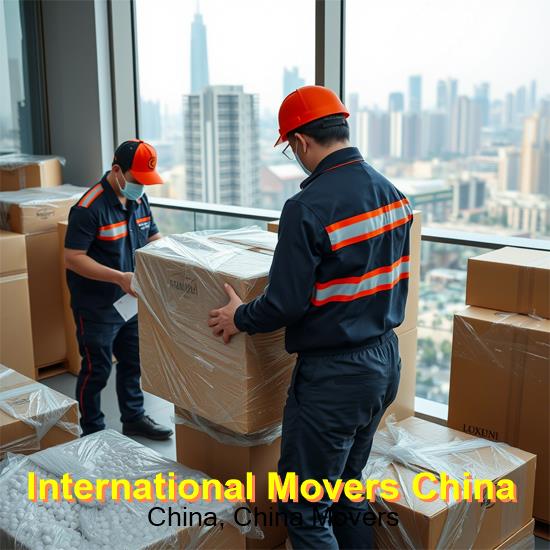
The crew arrives with the container on a lorry, or loads into a vehicle and transfers at a depot depending on whether your street can take an articulated trailer. Goods are wrapped, loaded and secured, and the doors are sealed with a numbered seal that is recorded on the paperwork.
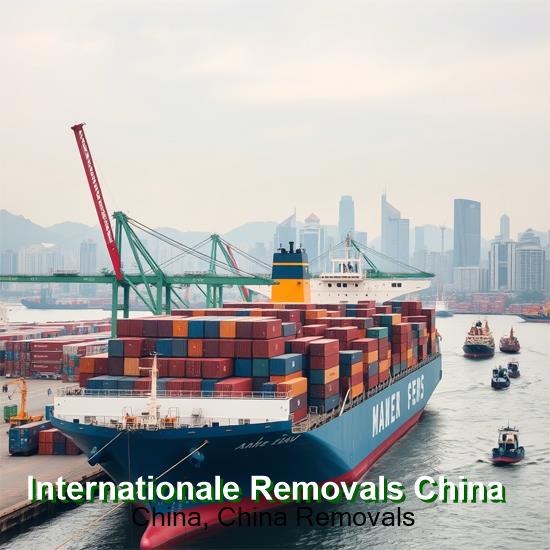
From there the box goes to a UK port, usually Felixstowe, Southampton or London Gateway, and sails for a Chinese terminal. Nobody opens it in transit unless customs select it for examination.
The handling advantage is the real one. A shared load is handled at least four extra times: into a groupage depot, into the container, out of the container at the far end, then out of the destination depot. Every one of those is a chance for something to be dropped, scuffed or mislaid. A sole use box removes all four.
The date advantage is the second one. Shared space waits until the container is full enough to sail. Your own box sails when it is booked. If you have a tenancy start, a school term or a job start date, that certainty is often worth more than the price difference.
Loading at your door is not always possible. A forty foot articulated vehicle needs room to turn and somewhere legal to stand, which plenty of British streets cannot offer. Where that is the case the crew loads into a smaller vehicle and transfers into the container at a depot, which costs a little more and is entirely normal.
These are planning ranges rather than quotes. A container is priced as a unit, so the figure does not fall much if you fill it three quarters full. That is the single biggest difference from shared space, where you pay for what you use.
£3,500 to £6,500
Around 33 cubic metres. The most common sole use booking.
£5,500 to £9,500
Around 67 cubic metres. Worth it once you pass about 35 cubic metres.
£6,000 to £10,000
Extra height rather than extra floor space. Useful for tall furniture.
Tell us roughly how much you are shipping and where it is going. That is enough to say whether a whole box is the right call.
We match you with your vetted mover, which means one team handles the whole relocation. It is free, with no obligation. Get a quote today and hold your dates.
Send your move detailsCall 07551 855 064 or +447551855064. Message us on WhatsApp.
People consistently underestimate volume, so it is worth being concrete.
A twenty foot container offers around thirty three cubic metres of usable space. In practice that takes the contents of a typical British two or three bedroom house: sofas, beds, wardrobes, a dining set, white goods and somewhere between forty and seventy cartons. It is the size most household moves to China actually need.
A forty foot container roughly doubles that to around sixty seven cubic metres. It makes sense once you pass about thirty five cubic metres, because at that point a twenty foot box plus part of a second shipment costs more and takes longer than one larger box.
A high cube is a forty foot with extra height rather than extra floor area. It helps with tall wardrobes, upright pianos and stacked cartons, and it costs slightly more.
Two things distort the maths. Chinese flats are typically smaller than British houses, so a proportion of what you load may not fit when it arrives. And a container that is only half full still costs the full price, so there is a real argument for either filling it or dropping to shared space rather than sitting in between.
Ask the surveyor for a cubic metre figure, not a guess. Every mover works from volume, and a number you can compare between quotes is worth having.
Compare this against the other ways of getting goods to China before you decide.
A move usually means moving money too, whether that is a deposit on a Chinese flat or funds coming back the other way. We have helped customers with currency exchange in any currency through trusted partners for many years, and our partners can help with the money side of your move. Mention it on the form and it gets included.
Experts in currency exchange
No hidden fees
5 star consumer ratings
Competitive exchange rate
Around thirty three cubic metres of usable space, which in practice takes a typical British two or three bedroom house. Sofas, beds, wardrobes, a dining set, white goods and somewhere between forty and seventy cartons. It is the size most household moves to China actually need.
Once your volume passes about thirty five cubic metres. Below that a forty foot means paying to ship empty space. Above it, a twenty foot box plus a second part shipment costs more and takes longer than one larger container.
A sole use container, sometimes called FCL or full container load, means the whole box is yours and nothing else travels in it. Shared space, often called LCL or less than container load, means your goods travel alongside other shipments and you pay for the space you occupy.
Sometimes. A forty foot articulated vehicle needs room to turn and somewhere legal to stand, which many British streets cannot offer. Where that is the case the crew loads into a smaller vehicle and transfers into the container at a depot. That costs a little more and is entirely normal.
Around six to ten weeks door to door depending on the destination city. The sailing itself is roughly thirty to thirty five days, clearance takes a few working days at most Chinese ports, and the rest is collection, loading and the road leg at the far end.
A set number of days after the container discharges before storage and container hire charges begin. Once it expires the charges accrue daily whether or not the delay was your fault, so it is worth knowing the number before you book and keeping the clearance paperwork moving.
Not normally. The doors are closed with a numbered seal recorded on the paperwork at loading and that seal stays intact unless customs select the container for examination. That is the main handling advantage over a shared load, which is handled several extra times.
Barely. A container is priced as a unit rather than by volume, so you pay much the same whether it is full or three quarters full. If you cannot fill it reasonably well, shared space is usually the better value option.
Ask the surveyor for a cubic metre figure in writing rather than an estimate over the phone. Every mover prices from volume, so a number you can compare between quotes is worth insisting on, and it also tells you honestly whether a whole box is justified.
Send your collection address, your Chinese destination, a rough idea of the volume and your date. A vetted mover from our network checks the route, the paperwork and the access, then comes back to you with the price.
Send your move detailsWe match international moving enquiries with vetted moving companies in the AGM Group network, each holding FIDI FAIM certification and BAR Overseas membership.
We are not a removal firm ourselves. We find you the one that suits your route, and you deal with them directly from there.