15
Years in international removals
850k+
Verified customer enquiries
3
FIDI-accredited partners
Trusted International Moving Network
Accredited Relocation Specialists


Canada has one requirement that trips people up more than any other, and it happens before your goods are anywhere near a ship. You need a list of what is coming, prepared and presented when you first arrive, not when the container does.
One vetted mover from our network handles the shipment. International movers who work Canada will tell you about the list at the outset, because a shipment arriving without it on record loses the concession.
The concession itself is generous. Used personal and household effects generally enter free of duty and tax when you are settling in Canada, provided you have owned and used them. Movers who know the route build the relocation around the list rather than the sailing.
Prepare the list before you fly. A detailed itemised list of everything that will follow you, with values. Two copies. You present it when you first enter Canada, and it is recorded against your entry.
Why this matters so much. The concession on settler effects is applied against that record. A shipment arriving with no list on file is far harder to clear under the concession, and sorting it retrospectively is slow and sometimes unsuccessful.
It has to be detailed. Not "household goods". Itemised, with values, in a form somebody who has never seen your possessions can work from. This is the same list your mover uses for the inventory, so preparing it once serves both purposes.
Ownership and use. The concession generally applies to items you have owned and used before arriving. New purchases, particularly anything still in retail packaging, sit outside it.
Your status matters. Settlers, returning residents, temporary residents and students are treated differently, and the detail changes. Confirm which category applies to you before you build the list.
Restricted and prohibited. Firearms are heavily regulated and require declaration and permits. Food, plant material and soil are restricted. Anything with ivory, exotic hardwood or shell falls under endangered species controls.
Alcohol and tobacco sit outside the concession, are subject to provincial rules as well as federal, and are rarely worth shipping.
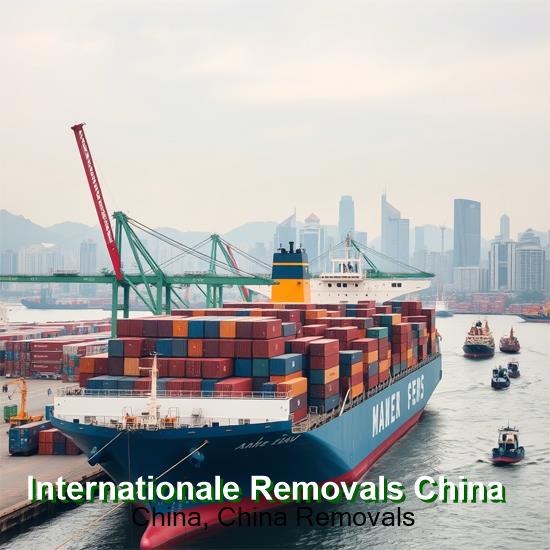
Transpacific sailings to Vancouver are frequent and among the shortest from China. The cost variable is the domestic leg, since Canada is enormous and most people are not moving to a port city.
£300 to £1,100
Personal effects to a west coast address.
£1,100 to £3,600
The common shipment on this route.
£3,000 to £8,500
Family households, Vancouver arrival.
Tell us your Canadian destination and when you first arrive. The list has to be ready before you fly, not before the container sails.
We match you with your vetted mover, which means one team handles the whole relocation. It is free, with no obligation. Get a quote today and hold your dates.
Send your move detailsCall 07551 855 064 or +447551855064. Message us on WhatsApp.
Vancouver is four to six weeks door to door from a coastal Chinese city, which makes this one of the shorter routes out of China. Prince Rupert also serves the west and connects to rail across the country.
Eastern Canada takes longer. Either an all water service to Montreal or Halifax, or a Vancouver arrival with a rail leg east. Six to eight weeks is realistic, and the rail leg is a substantial cost line for anywhere in Ontario or Quebec.
Winter deserves the same attention as northern China. A container delivered in Winnipeg, Edmonton or Montreal in January faces sustained sub zero temperatures. Liquids freeze and burst, screens crack, wood splits and adhesives fail, exactly as they do in Harbin. Remove every liquid before packing and let cartons acclimatise before opening them.
Roads close. Prairie and northern routes close in severe weather most winters. Build contingency into a January or February delivery.
Chinese New Year rushes transpacific capacity in the weeks before it, so a departure in late January or early February needs booking well ahead.
If your dates allow, delivery between May and October removes the winter question entirely and costs less in crew hours.
The cold weather page applies directly to a Canadian winter delivery, not just to northern China.
A move usually means moving money too, whether that is a deposit on a Chinese flat or funds coming back the other way. We have helped customers with currency exchange in any currency through trusted partners for many years, and our partners can help with the money side of your move. Mention it on the form and it gets included.
Experts in currency exchange
No hidden fees
5 star consumer ratings
Competitive exchange rate
A detailed itemised list with values of everything that will arrive after you, presented when you first enter Canada. The settler effects concession is applied against that record, so a shipment arriving with no list on file is far harder to clear.
When you first enter Canada, which is usually weeks before your container arrives. This is the most common and most expensive mistake on the route. Prepare it before you fly and carry two copies with you.
Generally not. Used personal and household effects normally enter free of duty and tax when you are settling in Canada, provided you have owned and used them. Alcohol, tobacco and anything bought new for the move sit outside it.
Detailed enough for someone who has never seen your possessions to work from. Not household goods, but itemised with values. It is the same list your mover uses for the inventory, so preparing it once serves both purposes.
Four to six weeks door to door to Vancouver, which is one of the shorter routes from China. Eastern Canada takes six to eight, either by an all water service to Montreal or Halifax or via Vancouver with a rail leg east.
As much as a northern Chinese one. A container delivered in Winnipeg or Montreal in January faces sustained sub zero temperatures, where liquids burst, screens crack and wood splits. Remove every liquid and let cartons acclimatise before opening.
Heavily regulated, requiring declaration and the correct permits. This is not something to discover on arrival. If you own anything in this category, raise it at the very start of the planning rather than at the survey.
The domestic leg is a substantial cost line for anywhere in Ontario, Quebec or the prairies. Canada is enormous and most people are not moving to a port city. Ask for the port to door portion as a separate figure.
Yes. Anything made before 1949 needs a cultural relics export certificate whatever the destination. Allow six weeks for appraisal at an authorised station, and raise ivory or exotic materials early since they are controlled at both ends.
Send your collection address, your Chinese destination, a rough idea of the volume and your date. A vetted mover from our network checks the route, the paperwork and the access, then comes back to you with the price.
Send your move detailsWe match international moving enquiries with vetted moving companies in the AGM Group network, each holding FIDI FAIM certification and BAR Overseas membership.
We are not a removal firm ourselves. We find you the one that suits your route, and you deal with them directly from there.