15
Years in international removals
850k+
Verified customer enquiries
3
FIDI-accredited partners
Trusted International Moving Network
Accredited Relocation Specialists


Hefei has grown faster over the last two decades than almost any city in China, from a provincial town into a serious research and manufacturing centre. The housing stock reflects that: most of it is new, planned, and considerably easier to deliver into than an older city of the same size.
One vetted mover from our network takes the job, matched for Anhui coverage. Hefei sees less international residential traffic than its industrial profile suggests, so it is worth confirming the firm has worked the city rather than assuming it as a Nanjing extension.
There are three ways in. Shanghai is about four hundred and fifty kilometres east, Ningbo is a comparable distance south east, and the Yangtze river terminals at Wuhu and Anqing sit much closer to the south.
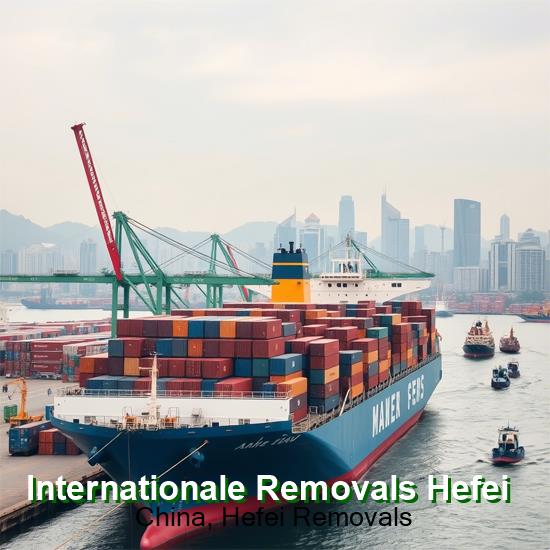
Hefei sits roughly equidistant from two major ports with a river option in between, which gives it more routing flexibility than most inland cities.
Shanghai, about four hundred and fifty kilometres east, is the default. It clears faster than almost anywhere in China and has the widest sailing choice from northern Europe. The road leg is four to five hours on good expressway.
Ningbo, a comparable distance to the south east, is the alternative. As the busiest port in the world by tonnage it has excellent frequency, and where a Ningbo sailing lands in the week you need, the extra driving is negligible.
The Yangtze terminals at Wuhu and Anqing sit considerably closer, to the south. They handle river, coastal and feeder traffic, and while a household container from Europe will not normally sail directly to them, a transhipment up the river is occasionally offered for larger volumes on an open timetable.
The practical advice is to ask for two of the three to be priced. Having genuine port choice is worth more than most people realise when you are trying to line a container up with a tenancy start date, and Hefei has more of it than a city this far inland has any right to.

Hefei is one of the easier inland Chinese cities to deliver into, mainly because so little of it is old.
Binhu New District, on the northern shore of Chao Lake in the south, is the newest large development and the current administrative and commercial centre. Planned from open ground, wide roads, modern compounds, working service lifts, space to unload. Straightforward throughout.
Shushan, in the west, holds the high technology zone and much of the research and academic housing. The major research institutions are here and so is a good deal of the corporate accommodation. Access is generally excellent.
Luyang and Yaohai, the older central and eastern districts, are conventional urban China. Mid and high rise, lifts in the newer stock, tighter streets in the older quarters near the centre. Nothing that counts as difficult.
Baohe, in the south, mixes older residential with newer lakeside development.
One thing worth flagging about this particular city. Hefei has expanded extremely quickly, and street layouts, compound entrances and approach roads have changed substantially within the last few years. A mover working from an older route plan can find an approach that no longer exists as it did, or a compound entrance that has moved. Confirming access details close to the date is worth more here than in a settled city.
The industrial base is research led rather than heavy: display manufacturing, semiconductors, home appliances and a substantial scientific research community. That population tends to be concentrated in Shushan and Binhu, which are the two easiest districts.
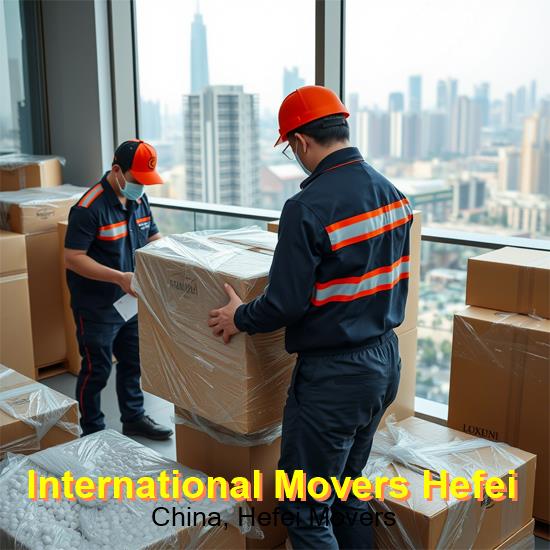
Hefei prices above the delta cities because of the inland leg and below the deep inland ones because that leg is only four or five hours. The port choice is where a quote can be improved.
Plan for around £300 to £1,200
Research postings and single contracts, of which there are many.
Plan for around £1,400 to £3,500
Apartment moves into Binhu or the Shushan technology zone.
Plan for around £3,700 to £8,600
Family relocations, usually corporate and generally into Binhu.
Tell us the district and confirm the access close to the date. This city changes faster than most.
We match you with your vetted mover, which means one team handles everything. It is free, with no obligation. Get a relocation quote today and hold your dates.
Send your move detailsCall 07551 855 064 or +447551855064. Message us on WhatsApp.
Clearance happens at the arrival port, Shanghai or Ningbo, rather than in Hefei. You need a valid residence permit, a full valued inventory and your passport details. Shanghai clears quickest of the options, which shortens the overall timeline.
The national rules are the same across mainland China, so the detail on permits, restricted goods and the cultural relics rule is set out in full on the China removals and shipping page. Read that before you start packing, particularly the section on items made before 1949.
Departures follow research and corporate contracts rather than school terms, which spreads demand across the year and makes capacity straightforward to find.
For Britain, apply for Transfer of Residence relief with HMRC before the goods leave. Anhui has a long tradition in ink stones, brushes and paper, the scholarly materials the province is known for, and most of what you can buy is modern and exports freely. Anything made before 1949 needs an export certificate.
A move usually means moving money too, whether that is a deposit on a Hefei flat or funds coming back the other way. We have helped customers with currency exchange in any currency through trusted partners for many years, and our partners can help with the money side of your move. Mention it on the form and it gets included.
Experts in currency exchange
No hidden fees
5 star consumer ratings
Competitive exchange rate
Hefei sits between the delta and central China, which is why it has more port choice than most inland cities on this list.
For the full picture on routes, sea freight, rail freight, costs and Chinese customs, start at the China shipping and moving page.
Shanghai is the default, about four hundred and fifty kilometres east, and clears fastest. Ningbo is a comparable distance south east with excellent sailing frequency. Yangtze terminals to the south are closer but handle river and feeder traffic rather than deep sea containers from Europe.
Yes. Hefei has more genuine routing choice than most cities this far inland, and having two options materially improves your chances of catching the sailing week you need. Ask for at least two of the three to be quoted.
Seven to nine weeks door to door by sea. Roughly thirty five days sailing, a few working days clearing at the port, and then four to five hours of expressway. Air freight into Xinqiao takes about twelve days and is priced by weight.
Binhu New District, on the northern shore of Chao Lake. It is the newest large development, planned from open ground with wide roads, modern compounds and working service lifts. Shushan, the technology zone in the west, is similarly straightforward.
Because street layouts, compound entrances and approach roads have changed substantially within recent years. A mover working from an older route plan can find an approach that no longer exists as it did. Confirming access details close to the date is worth more here than in a settled city.
Shushan and Binhu. The research institutions and technology employers are concentrated in the west and the newer administrative centre is in the south, so the international population sits mostly in the two easiest districts for delivery.
Less than most inland cities, because so little of it is old. The newer districts were planned around vehicles and the older central quarters are conventional rather than constrained. There are no conservation areas or heritage streets of the kind that complicate Nanjing or Jinan.
A valid residence permit, a complete inventory with values and your passport details. Clearance is at the coastal port rather than in Hefei. The goods should be used personal effects arriving as one shipment within the permitted window after you enter the country.
Modern pieces export without difficulty and Anhui is the traditional home of the best of them. Anything genuinely old is different. Items from before 1949 need an export certificate, and older ink stones and inscribed pieces are exactly the category that gets checked.
Send your collection address, your Hefei district, a rough idea of the volume and your date. A vetted mover from our network checks the route, the access and the paperwork, then comes back to you with the price.
Send your move detailsWe match international moving enquiries with vetted moving companies in the AGM Group network, each holding FIDI FAIM certification and BAR Overseas membership.
We are not a removal firm ourselves. We find you the one that suits your route, and you deal with them directly from there.