15
Years in international removals
850k+
Verified customer enquiries
3
FIDI-accredited partners
Trusted International Moving Network
Accredited Relocation Specialists


Wuxi sits on the shore of Lake Tai between Suzhou and Nanjing, and it has quietly built one of the larger Japanese business communities in China. Most moves here are corporate, most go to one planned district, and most are more straightforward than the city's size would suggest.
One vetted mover from our network handles it, matched for Jiangsu coverage. Wuxi sees steady international traffic rather than heavy traffic, which means the firms that work it properly are a smaller group than in Suzhou or Shanghai.
Almost everything clears at Shanghai, roughly a hundred and thirty kilometres east, and travels in by road in about two hours. Jiangyin, on the Yangtze in the north of the municipality, handles river and coastal traffic and occasionally appears on a quote.
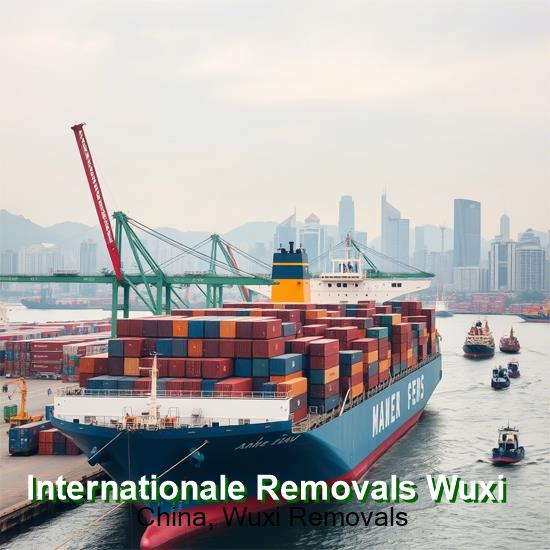
Wuxi has no deep sea port and does not need one. Shanghai is a hundred and thirty kilometres east and the delta expressway network is among the best in China, so the road leg is routine and inexpensive.
Your container clears at Yangshan or Waigaoqiao and travels west. Some movers bring the full box to the door. Others tranship at a local depot, particularly where the destination is in the older canal belt where a forty foot vehicle has no business being.
Jiangyin, in the north of the municipality on the Yangtze, is Wuxi's own port. It handles river, coastal and some short sea traffic. For a household shipment from Europe it is rarely the route, though it can appear on a quote where a feeder service suits.
Ningbo is also within range if a sailing there suits your dates better. The extra driving is modest against the value of hitting the week you need, so it is worth asking rather than assuming Shanghai is automatic.
The Japanese business community here is worth knowing about for a practical reason. It has been established for decades and the local moving trade grew up serving it, which means export packing standards and international paperwork are ordinary work for Wuxi crews rather than an occasional job.

Wuxi's international housing is concentrated to a degree that makes most moves here predictable.
Wuxi New District, in the south east, is the planned technology and manufacturing zone and holds the great majority of corporate housing. It was developed with Singaporean involvement and laid out accordingly: wide roads, compounds designed around vehicle access, working service lifts, room to unload. Several international schools sit within reach. This is the easy delivery and it is where most families end up.
Binhu, along the Lake Tai shore in the south west, holds a good deal of newer high end housing with lake views. Access is generally good, though some of the lakeside developments have conservation constraints on their approaches and the roads narrow as you get closer to the water.
Liangxi and the central districts are conventional urban China, mid and high rise, mostly lifted. The older stock near the centre has smaller lifts.
The canal belt is the constrained part. The Beijing to Hangzhou Grand Canal runs through Wuxi and the streets alongside it in the older quarters were laid out for boats and foot traffic. Bridges are low, turns are tight, and a large lorry frequently cannot get through. Deliveries there are made in a smaller vehicle with a hand carry at the end. Few international residents live there but some do, and it should be flagged at the survey.
Summers are hot and humid in the delta pattern, though Wuxi is marginally kinder than Nanjing upriver. July and August still cost more in crew hours than October does.
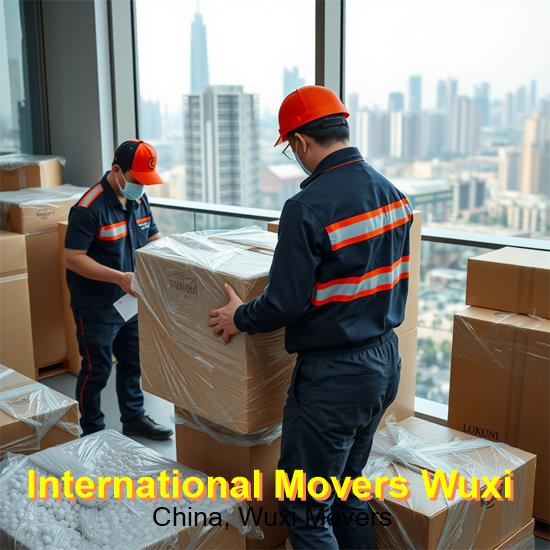
Wuxi prices close to Suzhou, with a slightly longer road leg. The New District concentration keeps most deliveries efficient, so the average here is lower than the city's size might suggest.
Plan for around £250 to £1,000
Short technical contracts and single postings in the manufacturing zones.
Plan for around £1,250 to £3,300
Apartment moves into the New District, the common Wuxi shipment.
Plan for around £3,500 to £8,300
Family postings, usually corporate and usually school driven.
Tell us the district and whether the street runs alongside the canal. That decides the vehicle.
We match you with your vetted mover, which means one team handles everything. It is free, with no obligation. Get a relocation quote today and hold your dates.
Send your move detailsCall 07551 855 064 or +447551855064. Message us on WhatsApp.
Clearance happens at the arrival port, normally Shanghai, rather than at Wuxi. You need a valid residence permit, a full valued inventory and your passport details. Shanghai clears personal effects quickly, which works in your favour on the overall timeline.
The national rules are the same across mainland China, so the detail on permits, restricted goods and the cultural relics rule is set out in full on the China removals and shipping page. Read that before you start packing, particularly the section on items made before 1949.
A good share of departures from Wuxi are onward corporate postings rather than repatriations, and Japan in particular is a frequent destination given the business community here. Those routes are short and well handled locally.
For Britain, apply for Transfer of Residence relief before the goods leave. Jiangsu has a serious trade in Yixing teaware, which is made nearby, and in classical furniture. Modern pieces export without difficulty. Anything from before 1949 needs an export certificate and should be assessed early.
A move usually means moving money too, whether that is a deposit on a Wuxi flat or funds coming back the other way. We have helped customers with currency exchange in any currency through trusted partners for many years, and our partners can help with the money side of your move. Mention it on the form and it gets included.
Experts in currency exchange
No hidden fees
5 star consumer ratings
Competitive exchange rate
The delta cities share the same ports and often the same weekly service, so a mover running this route can combine deliveries across several of them.
For the full picture on routes, sea freight, rail freight, costs and Chinese customs, start at the China shipping and moving page.
It has Jiangyin, on the Yangtze in the north of the municipality, which handles river, coastal and some short sea traffic. For a household shipment from Europe the container almost always clears at Shanghai and travels around two hours west by road instead.
Six to eight weeks door to door by sea. That is roughly thirty to thirty five days sailing, a few working days clearing at Shanghai, and then the road leg. The delta expressway network is excellent, so the final stage is predictable.
Wuxi New District in the south east. It was developed with Singaporean involvement and laid out for it: wide roads, compounds designed around vehicle access, working service lifts and space to unload. Most corporate housing sits there and several international schools are within reach.
The Grand Canal runs through Wuxi and the older streets alongside it were laid out for boats and foot traffic. Bridges are low, turns are tight, and a large lorry often cannot get through. Deliveries there use a smaller vehicle with a hand carry at the end.
Yes, and it is worth asking. The extra driving is modest against the value of catching the sailing week you need. Having two ports in play genuinely improves your chances of lining a container up with a tenancy date, so ask your mover to check both.
Better than its size suggests. A large Japanese business community has been established here for decades and the local moving trade grew up serving it, so export packing standards and international paperwork are ordinary work rather than an occasional job for Wuxi crews.
Sometimes. The Binhu developments along the shore are mostly modern with good access, but some have conservation constraints on their approaches and the roads narrow as you get closer to the water. Mention the specific development at the survey.
A valid residence permit, a complete inventory with values and your passport details. Clearance takes place at the arrival port rather than at Wuxi. The goods should be used personal effects arriving as a single shipment within the permitted window after you enter the country.
Modern pieces export without difficulty and the trade is right on your doorstep, since Yixing sits within the municipality. Anything genuinely old is different. Items from before 1949 need an export certificate, so have older pots and classical furniture assessed before you commit to shipping them.
Send your collection address, your Wuxi district, a rough idea of the volume and your date. A vetted mover from our network checks the route, the access and the paperwork, then comes back to you with the price.
Send your move detailsWe match international moving enquiries with vetted moving companies in the AGM Group network, each holding FIDI FAIM certification and BAR Overseas membership.
We are not a removal firm ourselves. We find you the one that suits your route, and you deal with them directly from there.