15
Years in international removals
850k+
Verified customer enquiries
3
FIDI-accredited partners
Trusted International Moving Network
Accredited Relocation Specialists


Tianjin is the port that clears half of northern China's household goods, and most people who use it never set foot in the city. If you are actually moving to Tianjin rather than through it, you get the rare advantage of living where your container lands.
We match you to one vetted mover from our network with northern China experience. Because Xingang handles so much Beijing-bound traffic, firms working this port are used to the paperwork. What they are less often asked for is a delivery inside Tianjin itself, which is a different job entirely.
Xingang sits in Binhai New Area, on the coast about fifty kilometres east of the old city. Nothing else in northern China comes close to it for volume. The drive into central Tianjin is under an hour, which makes this one of the shortest final legs available anywhere in the country.
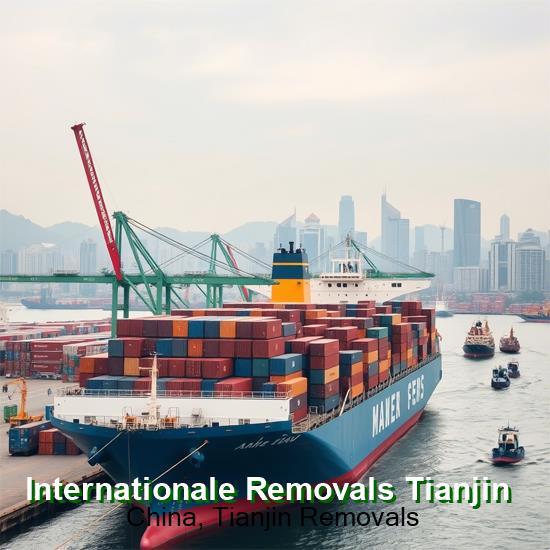
Xingang is the largest port in northern China and the clearance point for household goods bound for Beijing, Hebei and a good deal of Shanxi and Inner Mongolia. It exists at that scale because the capital has no coast of its own.
For a Tianjin resident that scale is a straight benefit. The customs operation is well practised, staffed for volume, and used to personal effects rather than only commercial cargo. Clearance times here are competitive with anywhere in China.
The final leg is where Tianjin genuinely differs. Binhai to the old city is under an hour on the expressway, and even a Binhai address is a twenty minute run from the terminal. Compare that with Beijing's hundred and forty kilometres, or Chongqing's fifteen hundred, and the arithmetic explains why a Tianjin quote for the same volume usually comes in lower than a capital one.
Dongjiang, the bonded area within Binhai, occasionally comes up in commercial shipping conversations. It is not normally relevant to a household move, and if a quote mentions it you should ask why.

Tianjin has an unusual housing stock for a Chinese city, because eight foreign powers built here and a good deal of what they built is still standing.
Heping and the Wudadao district hold roughly two thousand European style villas put up in the 1920s and 1930s across what are called the Five Great Avenues. They are handsome, they are sought after, and they are difficult. The lanes are narrow, the buildings are protected, staircases are original, and you cannot take a door frame off to get a wardrobe up. Crews who know the area plan for hoisting or for dismantling on site. Crews who do not, discover the problem at eleven in the morning with a lorry blocking a heritage street.
Hexi and Nankai are more conventional Chinese urban districts, largely mid and high rise apartment blocks. Lifts are usual, though the older blocks have small ones. Access here resembles any other northern Chinese city.
Binhai New Area and TEDA are where most foreign professionals now live. The development zone grew up around manufacturing, with the Airbus assembly line and a substantial Japanese, Korean and German business presence, and the housing was built to match. Modern compounds, service lifts, management booking, room to park. It is the easiest delivery in the municipality and it is fifteen minutes from the port.
Winter is worth planning around. Tianjin freezes properly from December to February, and a crew working an unheated Wudadao stairwell in January moves slower than the same crew in May.
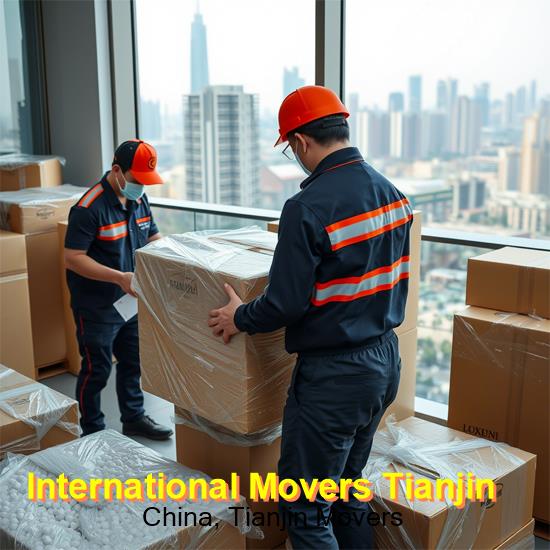
Tianjin usually prices below Beijing for identical volume, and the reason is the missing road leg. What can close that gap is the building. A Wudadao villa delivery can absorb more crew hours than a straightforward apartment move in the capital.
Plan for around £250 to £1,000
Language students, single postings and anyone taking a serviced flat in Hexi.
Plan for around £1,200 to £3,200
Apartment moves into Hexi, Nankai or a TEDA compound.
Plan for around £3,400 to £8,000
Family moves, whether into a Wudadao villa or a Binhai compound house.
Tell us whether the address is a concession villa, a city apartment or a Binhai compound. That is what sets the crew hours.
We match you with your vetted mover, which means one team handles everything. It is free, with no obligation. Get a relocation quote today and hold your dates.
Send your move detailsCall 07551 855 064 or +447551855064. Message us on WhatsApp.
Xingang is used to personal effects and clears them briskly when the paperwork is right. A valid residence permit, a full inventory with values and your passport details are the requirements. Because so much Beijing traffic passes through, the office is well staffed but correspondingly busy around the holiday peaks.
The national rules are the same across mainland China, so the detail on permits, restricted goods and the cultural relics rule is set out in full on the China removals and shipping page. Read that before you start packing, particularly the section on items made before 1949.
Departures from Tianjin follow the manufacturing calendar more than the school one. Engineering and automotive postings in Binhai run to project timetables, so people leave throughout the year rather than in a summer cluster. That makes capacity easier to find than it is out of Beijing.
Apply for Transfer of Residence relief with HMRC before the goods leave. And if you have collected anything from the antique trade around the old town or Ancient Culture Street, have it assessed for the cultural relics rule. Republican era pieces are common here and pre 1949 items need an export certificate.
A move usually means moving money too, whether that is a deposit on a Tianjin flat or funds coming back the other way. We have helped customers with currency exchange in any currency through trusted partners for many years, and our partners can help with the money side of your move. Mention it on the form and it gets included.
Experts in currency exchange
No hidden fees
5 star consumer ratings
Competitive exchange rate
Xingang is the clearance point for most of northern China, so several of these cities share the same port even though the road legs differ enormously.
For the full picture on routes, sea freight, rail freight, costs and Chinese customs, start at the China shipping and moving page.
At Xingang, in Binhai New Area, roughly fifty kilometres east of the old city. It is the largest port in northern China and handles household goods for Beijing and much of the north as well as for Tianjin itself. The customs operation there is well practised with personal effects.
Usually, for the same volume. The difference is the road leg. Beijing shipments clear at Xingang too, then travel a hundred and forty kilometres west. A Tianjin delivery is under an hour from the terminal. That saving shows up in the quote unless your building is difficult.
They are heritage protected. The Five Great Avenues hold around two thousand European style villas from the 1920s and 1930s, on narrow lanes, with original staircases and no lifts. You cannot remove a door frame or a railing to get a piece up. Large furniture often has to be hoisted or dismantled.
Binhai New Area, particularly around TEDA. The development zone grew up around foreign manufacturing and the housing was built for it: modern compounds, service lifts, space to park. It is the easiest delivery in the municipality and it sits fifteen minutes from the port.
Six to eight weeks door to door by sea in most cases. The sailing is roughly thirty five days, clearance at Xingang usually takes a few working days, and the final leg is short. Air freight into Binhai International takes about ten to twelve days and is priced by weight.
It affects the delivery day. Tianjin freezes from December through February, and a crew carrying furniture up an unheated concession stairwell works slower than the same crew in spring. Sailings are unaffected. If your date is movable, April to October is easier on everyone.
Plenty of people do. The intercity high speed line covers the distance in about half an hour, which is shorter than many Beijing cross city commutes. It also means some families ship to Tianjin deliberately, because the housing is cheaper and the delivery is simpler.
A valid residence permit, a complete inventory with values, and your passport details. The goods should be used personal effects arriving as one shipment within the permitted window after you enter the country. The rules are national rather than local to Tianjin.
Apply for Transfer of Residence relief with HMRC before anything is packed, because the reference has to appear on the customs entry. Then have any older pieces assessed. Republican era furniture and ceramics turn up often in Tianjin, and anything made before 1949 needs an export certificate.
Send your collection address, your Tianjin district, a rough idea of the volume and your date. A vetted mover from our network checks the route, the access and the paperwork, then comes back to you with the price.
Send your move detailsWe match international moving enquiries with vetted moving companies in the AGM Group network, each holding FIDI FAIM certification and BAR Overseas membership.
We are not a removal firm ourselves. We find you the one that suits your route, and you deal with them directly from there.