15
Years in international removals
850k+
Verified customer enquiries
3
FIDI-accredited partners
Trusted International Moving Network
Accredited Relocation Specialists


Hangzhou has grown a large international population on the back of its technology industry, and it has done it in a city built around a protected lake. Those two facts pull in opposite directions. The new districts are among the easiest deliveries in China. The lake side is among the most restricted.
We match you with one vetted mover from our network covering Zhejiang. Hangzhou has a port choice, Ningbo or Shanghai, which not every city does, and a firm that works both can often find you a better sailing date than one tied to a single terminal.
There is no deep sea container port here. Goods clear at Ningbo, about a hundred and seventy kilometres south east, or at Shanghai, roughly a hundred and eighty north east. Either way the road leg is around two to three hours.
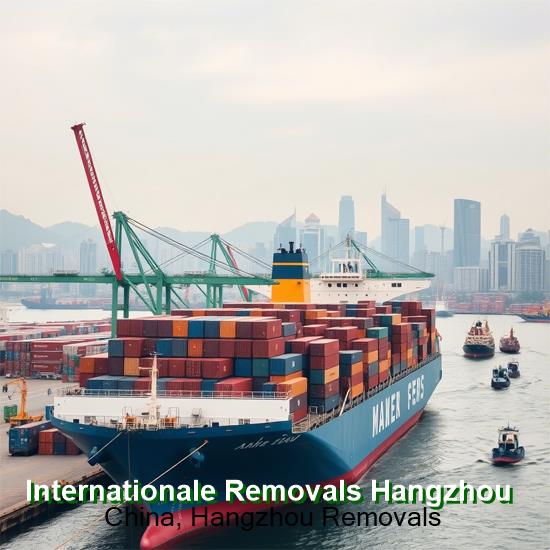
Hangzhou is inland by container shipping standards, sitting at the head of the bay with no deep sea terminal of its own. That turns out to be an advantage rather than a limitation, because it leaves you with two ports rather than one.
Ningbo is about a hundred and seventy kilometres south east and is the busiest port in the world by cargo tonnage, which means frequent sailings from northern Europe. Shanghai is about a hundred and eighty kilometres north east and clears faster than almost anywhere. Both are two to three hours by road.
The choice usually comes down to sailing dates. If your container needs to arrive in a particular week, having two terminals in play materially improves the odds of a suitable vessel. Ask your mover to price both rather than accepting the first routing offered.
Hangzhou's technology industry is what has built the international population here, and it has done so quickly. The city was a domestic tourist destination with a modest foreign community twenty years ago. It now has a substantial one, concentrated in the districts where the technology employers sit, and the moving trade has grown to match.
The Grand Canal terminates in Hangzhou, having run from Beijing. It carries genuine freight and it is worth knowing about as a piece of the city's geography, but it plays no part in a household move from Europe.

Hangzhou's easy districts and its difficult ones are separated by the lake.
Binjiang, south of the river, is the established technology district and holds a large share of the corporate housing. Planned compounds, service lifts, wide roads, room to unload. A straightforward delivery.
Yuhang, north west towards the Future Science and Technology City, is the newer expansion and is where much of the recent growth has gone. Newer again, planned again, and easy for the same reasons.
Shangcheng and the central districts are conventional urban China, mid and high rise, mostly with lifts. The older stock near the centre has smaller lifts and tighter street parking, but nothing unusual.
Xihu district and the West Lake area are the constrained ones. The lake is protected and the conservation rules around it are taken seriously. Building height is limited, so there are few towers and few service lifts. Vehicle access is restricted on some approaches, particularly around the scenic areas and the tea hills above the lake at Longjing. The ground rises as you move away from the water, so some addresses involve a slope as well as stairs. If you have taken a house up there, and people do, the survey is not optional.
Summers are hot and humid, comparable with Nanjing though marginally kinder. July and August deliveries run slower and cost more in crew hours.

Hangzhou prices modestly above the coastal cities because of the road leg, and the two port option keeps freight rates competitive. The conservation area is the main thing that lifts a quote beyond the ordinary.
Plan for around £300 to £1,100
Technology contracts and single postings taking a furnished flat.
Plan for around £1,300 to £3,400
Apartment moves into Binjiang or Yuhang, the common Hangzhou shipment.
Plan for around £3,600 to £8,400
Longer family postings, generally employer arranged and school driven.
Tell us the district and whether the address is inside the conservation area. That is what decides the survey.
We match you with your vetted mover, which means one team handles everything. It is free, with no obligation. Get a relocation quote today and hold your dates.
Send your move detailsCall 07551 855 064 or +447551855064. Message us on WhatsApp.
Clearance takes place at whichever port your container lands at, Ningbo or Shanghai, rather than in Hangzhou. You need a valid residence permit, a full valued inventory and your passport details. Both ports clear personal effects routinely, and Shanghai in particular is among the quicker operations in the country.
The national rules are the same across mainland China, so the detail on permits, restricted goods and the cultural relics rule is set out in full on the China removals and shipping page. Read that before you start packing, particularly the section on items made before 1949.
Departures here follow technology contracts more than school terms, which spreads the demand across the year and makes booking easier than in the delta's larger cities. A good share of onward moves go to Singapore, the United States or back across Europe.
For Britain, apply for Transfer of Residence relief with HMRC before the goods leave. Zhejiang has a long tradition in silk, tea ware and carved wood. Most of what you can buy is modern and exports without issue. Anything from before 1949 needs an export certificate and should be assessed before packing rather than at the port.
A move usually means moving money too, whether that is a deposit on a Hangzhou flat or funds coming back the other way. We have helped customers with currency exchange in any currency through trusted partners for many years, and our partners can help with the money side of your move. Mention it on the form and it gets included.
Experts in currency exchange
No hidden fees
5 star consumer ratings
Competitive exchange rate
Hangzhou sits between two major ports, which is unusual. Most cities on this list are tied to one.
For the full picture on routes, sea freight, rail freight, costs and Chinese customs, start at the China shipping and moving page.
Either Ningbo, about a hundred and seventy kilometres south east, or Shanghai, about a hundred and eighty north east. Both are two to three hours by road. Having two terminals in play improves your odds of a sailing that matches your dates, so ask your mover to price both.
Six to eight weeks door to door by sea. That covers roughly thirty five days sailing, a few working days clearing at whichever port your goods land at, and then the road leg into Hangzhou. Air freight into Xiaoshan takes about ten to twelve days at considerably higher cost.
The lake is protected and the conservation rules limit building height, which means few towers and few service lifts nearby. Vehicle access is restricted on some approaches, particularly around the scenic areas and the tea hills. The ground rises away from the water, so slopes and stairs are common.
Binjiang, south of the river, and Yuhang to the north west. Both grew up around the technology employers, both were planned from open ground and both have modern compounds with working service lifts. They are the straightforward deliveries in the city.
A much larger one than it had twenty years ago. The technology industry has driven fast growth, and the international population is concentrated in the districts where those employers sit. The local moving trade has grown alongside it, so international household goods are routine work here.
No. It terminates in Hangzhou after running from Beijing and it carries genuine domestic freight, but it plays no part in a household shipment from Europe. Your goods will arrive by sea at Ningbo or Shanghai and finish the journey by road.
It does. Hangzhou summers are hot and humid, comparable with Nanjing though marginally kinder. July and August deliveries run slower and need more crew hours, which shows up in the price. Spring and autumn are easier for everyone involved.
A valid residence permit, a complete inventory with values and your passport details. Clearance happens at the arrival port rather than in Hangzhou. The goods should be used personal effects arriving as a single shipment within the permitted window after you enter the country.
Modern pieces export without difficulty and Zhejiang has an excellent trade in both. Anything genuinely old is different. Items from before 1949 need an export certificate, and carved wood in particular is worth having assessed before you commit to shipping it.
Send your collection address, your Hangzhou district, a rough idea of the volume and your date. A vetted mover from our network checks the route, the access and the paperwork, then comes back to you with the price.
Send your move detailsWe match international moving enquiries with vetted moving companies in the AGM Group network, each holding FIDI FAIM certification and BAR Overseas membership.
We are not a removal firm ourselves. We find you the one that suits your route, and you deal with them directly from there.