15
Years in international removals
850k+
Verified customer enquiries
3
FIDI-accredited partners
Trusted International Moving Network
Accredited Relocation Specialists


Nantong sits on the north bank of the Yangtze directly opposite Shanghai and spent most of its history effectively cut off from it. The river was the barrier. Two bridges have changed that, and a city that used to be a ferry ride away is now an hour and a half by road.
One vetted mover from our network handles it, matched for Jiangsu coverage. Nantong sees less international traffic than the cities on the south bank, so it is worth confirming the firm has worked the crossing rather than assuming it is a Shanghai suburb.
Containers clear at Shanghai and cross the river by bridge. Nantong has substantial port facilities of its own on the Yangtze, with deep water development at Tongzhou Bay, though these mostly handle bulk and regional traffic.
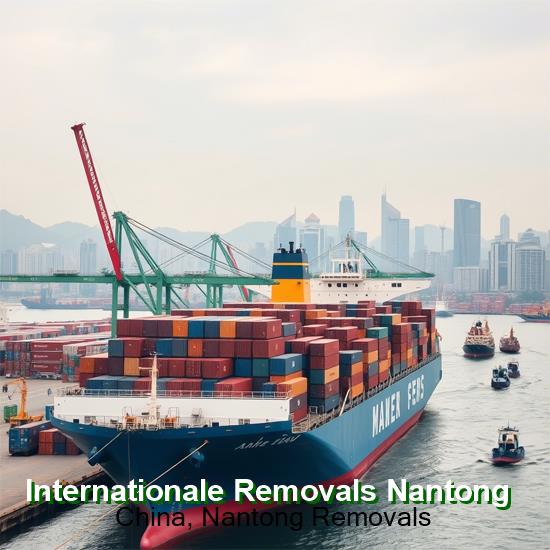
For most of its history Nantong was the wrong side of the Yangtze. Shanghai was visible across the water and reaching it meant a ferry, which is why a city with real industry and a long commercial tradition stayed comparatively provincial while the south bank grew.
The bridges changed the arithmetic. The first opened in 2008 and a second in 2020, and together they put Shanghai within about an hour and a half by road. For a household move that means Nantong now routes exactly like a south bank delta city, with the crossing as the only additional consideration.
Your container clears at Yangshan or Waigaoqiao and drives north across the river. The crossing itself is straightforward. The approach roads are the part that needs timing, because bridge traffic is heavy at peak periods and there is no convenient alternative route.
Nantong has its own port facilities along the Yangtze, with deep water development at Tongzhou Bay in the east. They handle bulk, project and regional cargo rather than household containers from Europe, so they are unlikely to feature on your booking.
Ningbo is possible but adds a long drive with two river crossings. Shanghai is almost always the right answer here.

Nantong is flat, ordered and considerably less congested than the south bank cities, which makes it a pleasant delivery.
Chongchuan, the central district, is the main urban area. Mid and high rise blocks, lifts standard in the newer stock, wide streets. The older centre has some tighter lanes and smaller lifts, but nothing that would count as difficult by Chinese standards.
Gangzha, north of the centre, is the older industrial district with a mix of factory era housing and newer development. Roads are wide, built for goods vehicles.
Tongzhou and Haimen, east of the city, have grown quickly and hold much of the newer compound housing. Planned layouts, service lifts, easy access.
Qidong, at the eastern tip where the Yangtze meets the sea, is more spread out and coastal, with newer resort and residential development.
The textile industry is worth knowing about because it is the reason many foreign residents are here. Nantong is one of China's principal home textile centres, with large wholesale markets in the outer districts, and a good deal of the international business population is connected to that trade. If you are buying textiles in quantity to take home, the same distinction applies as anywhere else: goods bought for resale are not used personal effects and need declaring separately.
The city has an unusual civic history. It was developed as a model industrial town from the 1890s by a reforming industrialist who built mills, schools and museums together, and a fair amount of that early planning survives in how the older centre is laid out.
Nantong prices slightly above Suzhou for the same volume, entirely because of the crossing and the extra driving. Delivery in the city is cheap because the ground is flat and the compounds are modern.
Plan for around £250 to £1,000
Textile trade postings and single contracts, of which there are many here.
Plan for around £1,250 to £3,300
Apartment moves into Chongchuan or the eastern districts.
Plan for around £3,500 to £8,200
Family postings, usually corporate and generally into Tongzhou or Haimen.
Tell us the district and your preferred delivery window. The bridge timing is worth getting right.
We match you with your vetted mover, which means one team handles everything. It is free, with no obligation. Get a relocation quote today and hold your dates.
Send your move detailsCall 07551 855 064 or +447551855064. Message us on WhatsApp.
Clearance is at Shanghai, so your paperwork goes to the port on the other side of the river. You need a valid residence permit, a full valued inventory and your passport details. Keep anything bought for the textile trade entirely out of the household declaration.
The national rules are the same across mainland China, so the detail on permits, restricted goods and the cultural relics rule is set out in full on the China removals and shipping page. Read that before you start packing, particularly the section on items made before 1949.
Departures follow business contracts rather than school terms, which spreads demand across the year and makes capacity easier to find than on the south bank.
For Britain, apply for Transfer of Residence relief with HMRC before the goods leave. If you have bought textiles or homeware in quantity, keep it in a separate commercial consignment with its own invoices. And anything made before 1949 needs an export certificate, which applies to older furniture and porcelain as much as anywhere else in Jiangsu.
A move usually means moving money too, whether that is a deposit on a Nantong flat or funds coming back the other way. We have helped customers with currency exchange in any currency through trusted partners for many years, and our partners can help with the money side of your move. Mention it on the form and it gets included.
Experts in currency exchange
No hidden fees
5 star consumer ratings
Competitive exchange rate
Nantong is the only city on this list sitting on the north bank of the Yangtze, which is why the crossing appears in every quote.
For the full picture on routes, sea freight, rail freight, costs and Chinese customs, start at the China shipping and moving page.
They clear at Shanghai and cross the Yangtze by bridge. Two crossings opened in 2008 and 2020, and together they put Shanghai within about an hour and a half by road. Before them the city was effectively a ferry ride from the south bank.
Yes, with substantial facilities along the Yangtze and deep water development at Tongzhou Bay in the east. They handle bulk, project and regional cargo rather than household containers from Europe, so they are unlikely to feature on your booking.
The crossing itself is straightforward. The approach roads need timing, because bridge traffic is heavy at peak periods and there is no convenient alternative. A delivery scheduled to cross at the wrong hour can lose most of a morning.
Tongzhou or Haimen, east of the city, where most of the newer compound housing sits with planned layouts and service lifts. Chongchuan, the central district, is also straightforward. The city is flat throughout, which helps everywhere.
Six to eight weeks door to door by sea. Roughly thirty to thirty five days sailing, a few working days clearing at Shanghai, and then the crossing and delivery. Shanghai clears faster than most Chinese ports, which helps the overall timing.
Because Nantong is one of China's principal home textile centres, with large wholesale markets in the outer districts. A good deal of the international business population is connected to that trade, which shapes both the housing market and the kind of shipments that leave the city.
Not inside your household shipment if they are bought for resale. Goods for trade are not used personal effects and need declaring separately with their own invoices. Mixing them into a personal effects container risks the relief on the whole shipment.
A valid residence permit, a complete inventory with values and your passport details. Clearance is at Shanghai rather than Nantong, so the paperwork goes to the port. The goods should be used personal effects arriving as one shipment within the permitted window.
Easier in the city and slightly dearer overall. The ground is flat, the streets are wide and there is far less congestion than on the south bank. What adds cost is the crossing and the longer road leg from the port.
Send your collection address, your Nantong district, a rough idea of the volume and your date. A vetted mover from our network checks the route, the access and the paperwork, then comes back to you with the price.
Send your move detailsWe match international moving enquiries with vetted moving companies in the AGM Group network, each holding FIDI FAIM certification and BAR Overseas membership.
We are not a removal firm ourselves. We find you the one that suits your route, and you deal with them directly from there.