15
Years in international removals
850k+
Verified customer enquiries
3
FIDI-accredited partners
Trusted International Moving Network
Accredited Relocation Specialists


Beijing has no port. Every container of household goods bound for the capital lands at Tianjin, about a hundred and forty kilometres east, clears there, and finishes the journey by road. That extra leg is the thing that separates a Beijing quote from a Shanghai one, and it is worth understanding before you compare prices.
We match your enquiry to one vetted mover from our network that runs this route regularly. Beijing rewards experience more than most Chinese cities, because the delivery rules are genuinely restrictive and a crew that has not worked here before will discover that on the day.
The road leg itself is straightforward, roughly two hours on the Jingjintang expressway in normal conditions. What is not straightforward is the last few kilometres. Goods vehicles face daytime restrictions inside the fifth ring road, and central deliveries often need a permit and an early morning slot.
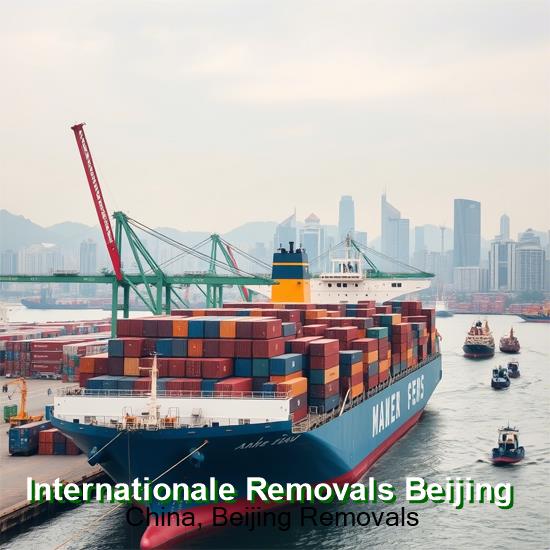
Tianjin Xingang is one of the largest ports in northern China and handles almost all household goods destined for Beijing. Clearance happens there, not in Beijing, which means the customs office your paperwork goes to is in a different municipality from your new address. This occasionally confuses people who expect to attend in person. You do not.
Once cleared, the container or its contents travel west by road. The Jingjintang expressway covers the distance in about two hours when it is moving, longer during the holiday peaks. Some movers tranship into a smaller vehicle at a Beijing depot rather than bringing the full container into the city, because a forty foot box has nowhere to turn in most residential streets.
Air freight into Beijing Capital or Daxing is the alternative for urgent or small consignments, and it removes the Tianjin leg entirely. It costs considerably more and it is priced by weight, so it suits clothes and documents rather than furniture.

Beijing spreads a long way, and where you land changes the job completely.
Shunyi, out past the airport, holds most of the villa compounds. Houshayu, Central Park and the estates around the international schools were built for exactly this kind of move: wide roads, room to park, ground floor access, occasionally a lift. It is the easiest delivery in the city and the furthest from the centre.
Chaoyang covers Sanlitun, Lido, Liangmaqiao and the CBD. Modern towers with service lifts, building management approval, booked slots and insurance checks. Similar to Pudong in Shanghai in how it works, though the compounds tend to be smaller.
Wangjing in the north east is dense high rise, popular with Korean and Chinese professional families. Lifts are standard but small, and parking near the tower entrance often needs arranging with the estate office.
The hutongs of Dongcheng and Xicheng are a different proposition altogether. Courtyard houses sit off alleys that a van can rarely enter and a lorry never can. Goods come in by hand or on a barrow from the nearest through road. Some alleys have bollards. Some have a step at the courtyard gate. If this is your address, say so at the survey stage, because the labour cost is the quote.
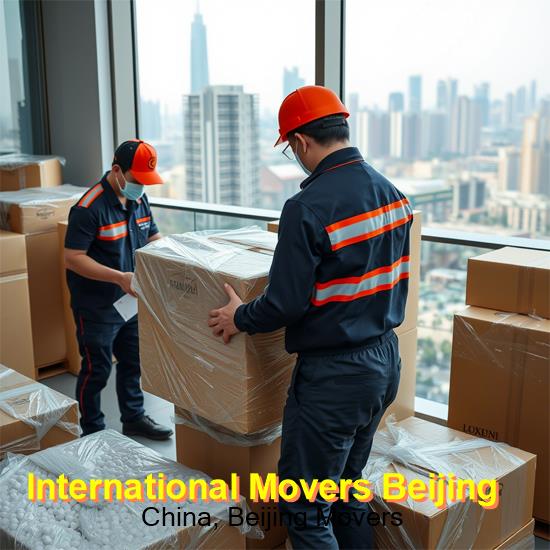
Beijing sits slightly above Shanghai on price for the same volume, and the reason is the Tianjin road leg plus the delivery restrictions. It is not a large difference, but it is a consistent one, and a quote that does not reflect it is worth questioning.
Plan for around £300 to £1,200
Students at the language universities, single postings, serviced apartment lets.
Plan for around £1,400 to £3,600
Apartment moves into Chaoyang or Wangjing where the flat is already part furnished.
Plan for around £3,800 to £9,000
Family relocations to the Shunyi villa compounds, usually with school terms driving the date.
Tell us the district and whether your address is a compound, a tower or a hutong. Those three answers set the price.
We match you with your vetted mover, which means one team handles everything. It is free, with no obligation. Get a relocation quote today and hold your dates.
Send your move detailsCall 07551 855 064 or +447551855064. Message us on WhatsApp.
Your clearance happens at Tianjin, not Beijing. You need a valid residence permit, a full valued inventory and your passport details available. Because the port and the delivery address are in different municipalities, allow a little more time than a coastal city would need.
The national rules are the same across mainland China, so the detail on permits, restricted goods and the cultural relics rule is set out in full on the China removals and shipping page. Read that before you start packing, particularly the section on items made before 1949.
Return moves out of Beijing tend to cluster around June and July, when international school terms end and diplomatic and corporate postings rotate. That is also when capacity is tightest, so booking early matters more here than it does elsewhere.
The container leaves through Tianjin the same way it came, which means adding the road leg to your timeline at the front instead of the back. Apply for Transfer of Residence relief before the goods move. And if you have bought anything from the Panjiayuan market or a Liulichang shop, get it assessed before it is packed, because pre 1949 pieces need an export certificate.
A move usually means moving money too, whether that is a deposit on a Beijing flat or funds coming back the other way. We have helped customers with currency exchange in any currency through trusted partners for many years, and our partners can help with the money side of your move. Mention it on the form and it gets included.
Experts in currency exchange
No hidden fees
5 star consumer ratings
Competitive exchange rate
Tianjin is the port that serves Beijing. The other northern cities on this list clear through Tianjin, Dalian or Qingdao depending on the sailing.
For the full picture on routes, sea freight, rail freight, costs and Chinese customs, start at the China shipping and moving page.
No. Beijing is landlocked, so household goods arrive at Tianjin Xingang and clear customs there. The last hundred and forty kilometres are covered by road. Many movers tranship into a smaller vehicle at a Beijing depot, because a forty foot container cannot manoeuvre in most residential streets.
Allow seven to nine weeks door to door by sea. That is roughly thirty five days sailing, several days clearing at Tianjin, the road leg, and then delivery scheduled around the city's vehicle restrictions. Air freight into Capital or Daxing takes about ten to twelve days and skips Tianjin entirely.
Not to the door. Hutong alleys are too narrow, some have bollards, and there is usually a raised step at the courtyard gate. Goods come in by hand or barrow from the nearest through road. It is a slower job and the labour is what you pay for, so flag the address early.
Yes. Goods vehicles face daytime restrictions inside the fifth ring road, so central deliveries are often scheduled early morning or in the evening, sometimes with a permit. Your mover arranges this, but it does mean you may not get to choose the hour.
Shunyi, comfortably. The villa compounds out past the airport were built with vehicle access in mind: wide roads, space to park, mostly ground floor entry. It is the simplest delivery in Beijing, which is one reason families with a full container of furniture tend to end up there.
It affects the working day rather than the shipping. Beijing winters are cold and dry, crews work slower in sub zero conditions, and a delivery that would take six hours in October can take eight in January. Sailings are unaffected. If your date is flexible, spring and autumn are kinder.
It depends where you are heading. Shunyi villas are large and often let unfurnished, so shipping makes sense. Chaoyang and Wangjing flats are smaller and frequently come part furnished, in which case a full container of British furniture is an expensive way to fill a storage unit.
A valid residence permit, a full inventory with values, and your passport details. The goods should be used personal effects arriving as a single shipment within the permitted window after you enter the country. Clearance is handled at Tianjin, so build in a little extra time.
As early as you can if you are moving in June or July. That is when school terms end and postings rotate, and it is the busiest window of the year out of Beijing. Apply for Transfer of Residence relief at the same time, since the reference has to be on the entry when the goods land.
Send your collection address, your Beijing district, a rough idea of the volume and your date. A vetted mover from our network checks the route, the access and the paperwork, then comes back to you with the price.
Send your move detailsWe match international moving enquiries with vetted moving companies in the AGM Group network, each holding FIDI FAIM certification and BAR Overseas membership.
We are not a removal firm ourselves. We find you the one that suits your route, and you deal with them directly from there.