15
Years in international removals
850k+
Verified customer enquiries
3
FIDI-accredited partners
Trusted International Moving Network
Accredited Relocation Specialists


Nobody can price a China move over the phone in thirty seconds, and anyone who tries is guessing. Five things set the figure, and if a quote does not address all five it will change later.
We put your details in front of one vetted mover from our network who prices it properly. International movers who know this route price the domestic leg separately. What you want is a number built on a survey, not an estimate built on a postcode.
The bands on this page are for planning. They exist so you can tell whether a quote is in the right area, not so you can book from them. Every relocation is priced on its own survey, and good movers say so up front.
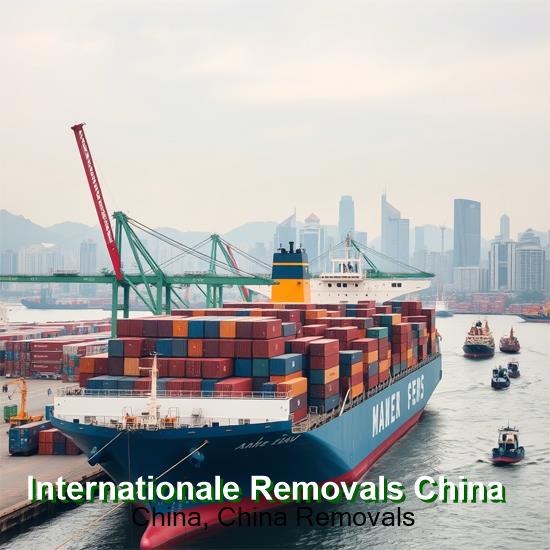
Volume. Everything starts here. Sea and rail price by cubic metre or by container, and air by chargeable weight. A proper survey produces a cubic metre figure, and that figure is the number to compare between quotes. An estimate produced without one is a guess dressed up as a price.
Mode. Sea is cheapest and slowest. Rail sits between sea and air and lands inland, which matters enormously for some destinations. Air is fastest, priced by weight, and only sensible for a fraction of a household. The same goods can differ by several multiples depending on which you choose.
Destination city. This is where China differs from most countries. A container to Shanghai finishes near the port. The same container to Kunming or Harbin carries a road leg of a thousand kilometres or more, and that leg is real money. Ask what the domestic portion costs, separately.
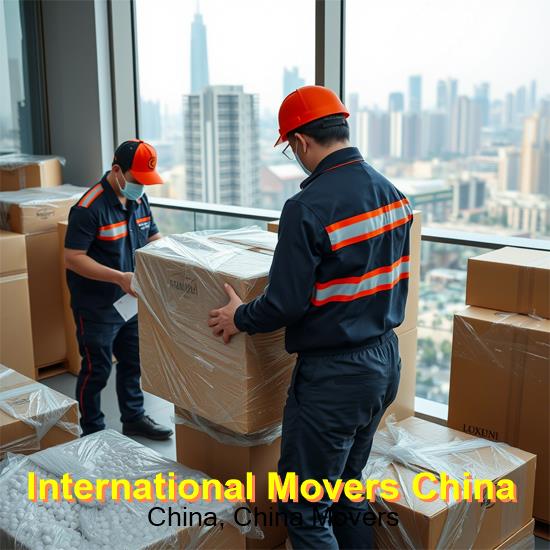
Access at both ends. A ground floor flat with parking outside is not the same job as a fourth floor walk up in a lane a lorry cannot enter. Crew hours are a genuine cost line, and the Chinese end is often the harder one.
Timing. Fixed dates cost more than flexible ones because they rule out shared container space. The weeks before Chinese New Year are the busiest of the year on this route, and summer is the peak for family moves.
These are planning ranges for a coastal Chinese destination. An inland city adds the domestic leg on top, and that addition is larger than most people expect.
£250 to £1,100
Students, single people, part furnished lets.
£1,200 to £4,200
One or two bedroom flats. The most common booking.
£3,500 to £9,500
Family homes. Fixed sailing date, fewest handling stages.
Tell us roughly what you are shipping and where it is going. You will get a figure built on a survey rather than a postcode.
We match you with your vetted mover, which means one team handles the whole relocation. It is free, with no obligation. Get a quote today and hold your dates.
Send your move detailsCall 07551 855 064 or +447551855064. Message us on WhatsApp.
A cheap quote and a complete quote are different things. These are the items most often missing from the first number.
Destination charges. Terminal handling, documentation and delivery at the Chinese end. Sometimes quoted as payable locally, which means the figure you were given was never the whole cost. Ask for it in writing either way.
The domestic road leg. For any inland Chinese city this is substantial and it is sometimes described vaguely. Ask what the portion from port to door costs as a separate line.
Customs handling. At both ends. Usually modest, but it should be visible rather than assumed.
Port storage and equipment charges. These begin once free time expires and accrue daily. They are nobody's fault until they happen and then they are entirely your bill. Ask how many free days you have.
Packing materials. Sometimes included, sometimes charged separately, and the difference on a full household is not trivial.
Insurance. Usually optional and usually worth having. Check the cover level, the excess and whether owner packed cartons are treated differently.
Storage at either end. If your dates slip, where do the goods wait and what does that cost per week.
Waiting time and second visits. If the crew cannot park or the lift is not booked, someone pays for the wasted hours. It is generally in the terms, whether or not it was in the conversation.
The mode you choose changes the price basis entirely, so it is worth reading those pages first.
A move usually means moving money too, whether that is a deposit on a Chinese flat or funds coming back the other way. We have helped customers with currency exchange in any currency through trusted partners for many years, and our partners can help with the money side of your move. Mention it on the form and it gets included.
Experts in currency exchange
No hidden fees
5 star consumer ratings
Competitive exchange rate
For a coastal destination, boxes run roughly two hundred and fifty to eleven hundred pounds, shared container space twelve hundred to four thousand two hundred, and a whole container three and a half to nine and a half thousand. An inland city adds the domestic road leg on top.
Because five things set the price and a phone call establishes none of them properly. Volume, mode, destination city, access at both ends and timing. A figure given without a survey is an opening position rather than a quote, and it will change.
Volume, by a distance. Sea and rail price by cubic metre or by container and air by chargeable weight, so shipping less is the largest lever you have. A proper survey produces a cubic metre figure, and that figure is what to compare between quotes.
Because China is large and its ports are on one side of it. A container to Shanghai finishes near the port. The same container to Kunming or Harbin carries a road leg of a thousand kilometres or more, and that leg is real money rather than a rounding error.
Destination charges, the domestic road leg for inland cities, customs handling, port storage once free time expires, packing materials, insurance and storage if your dates slip. Ask for each of them in writing rather than assuming they are included.
Only after you have checked what each one includes. The cheapest is often the one that has left something out, and destination charges described as payable locally means the number you were given was never the whole cost.
Charges that begin once your free time at the port expires and accrue daily until the container is collected. They are nobody's fault until they happen and then they are entirely your bill. Ask how many free days you have before you book.
Insist on a cubic metre figure from each, name the destination city rather than the country, and ask for destination charges and the port to door cost as separate written lines. Without those three, you are comparing numbers that measure different things.
Yes. A fixed date costs more than a flexible one because it rules out shared container space. The weeks before Chinese New Year are the busiest of the year on this route and summer is the peak for family moves, so both carry a premium.
Send your collection address, your Chinese destination, a rough idea of the volume and your date. A vetted mover from our network checks the route, the paperwork and the access, then comes back to you with the price.
Send your move detailsWe match international moving enquiries with vetted moving companies in the AGM Group network, each holding FIDI FAIM certification and BAR Overseas membership.
We are not a removal firm ourselves. We find you the one that suits your route, and you deal with them directly from there.