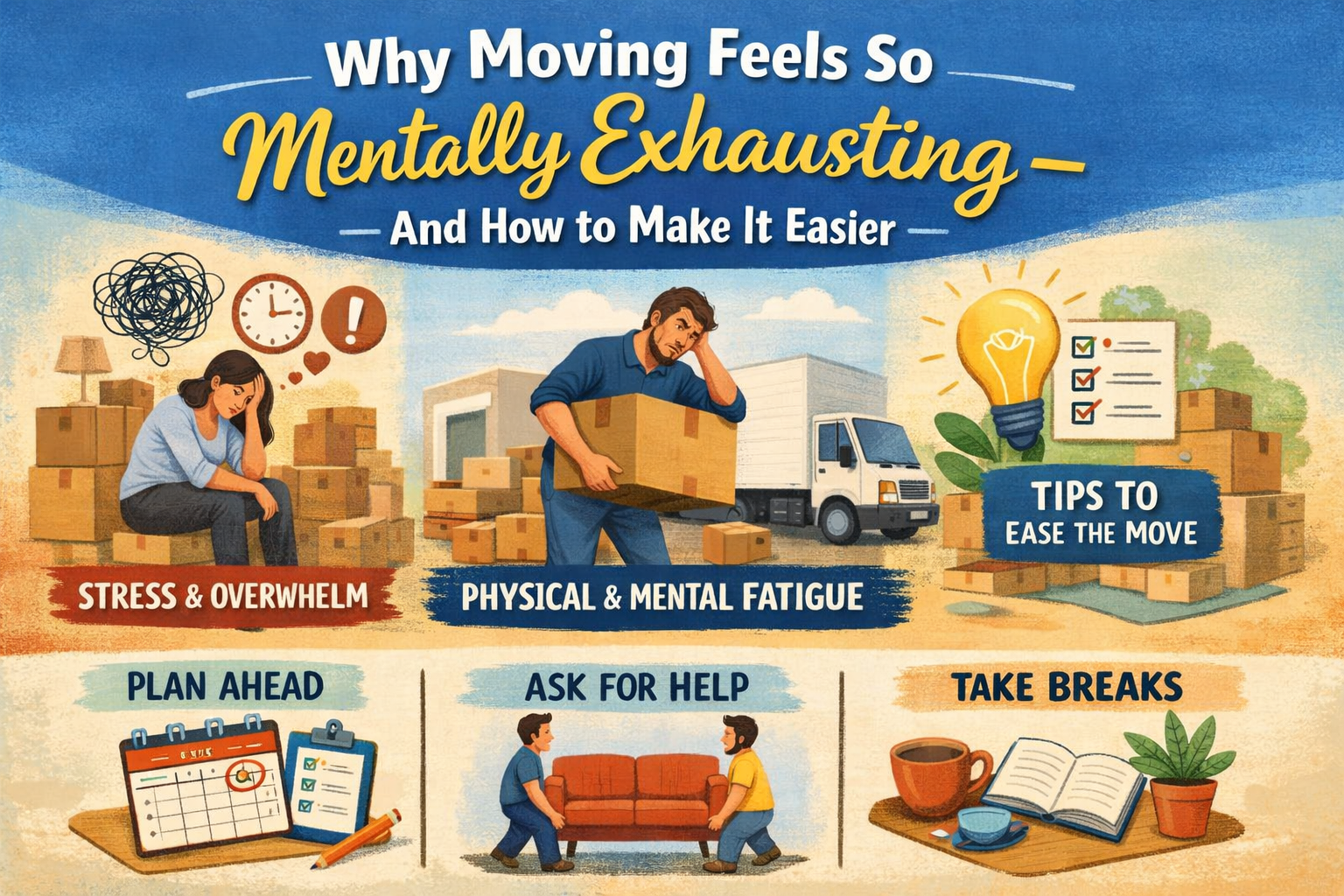
Moving house is hard work. But it's not just the heavy boxes and sore muscles that make it tough. Moving can leave you feeling completely drained mentally too. Let's look at why this happens and what you can do about it.
Why Does Moving Tire Out Your Brain?
When you move, you have to make hundreds of small choices every single day. Which box should this go in? Do I need this old school project? Should I pack the kitchen first or the bedroom?
Your brain gets tired from making so many decisions. It's like your mind is running a marathon, even when your body is sat still.
Moving means leaving behind things you know. Your room looks different. The sounds at night change. You might not know where the nearest shop is.
This is called "change overload". Your brain has to work extra hard to get used to all these new things at once. It's exhausting because your mind never gets a break.
Leaving your old home, your friends, or your neighbourhood can make you feel sad or worried. You might feel excited about the new place but also upset about what you're leaving behind.
These mixed feelings take up a lot of mental energy. It's completely normal to feel this way.
During a move, you need to remember loads of things:
- Where you packed your school uniform
- When the removal van is coming
- Your new address
- Which boxes go in which room
Trying to keep track of everything is like juggling whilst riding a bike. Your brain gets worn out.
Moving often means other people make decisions for you. Maybe your parents chose the new house. Perhaps you had to move because of a parent's job.
When you can't control what's happening, it can make you feel stressed and anxious. This drains your mental energy even more.
Need Help With Your Move?
Professional removals companies can take a lot of the stress out of moving. Get expert help with packing, transport, and settling into your new home.
Find Removals Companies Near YouHow to Make Moving Easier on Your Mind
Break Things Into Small Steps
Don't try to do everything at once. Make a list and tackle one small job at a time.
Instead of "pack my room", try:
- Pack my books
- Pack my clothes
- Pack my games
Ticking off small tasks feels good and stops you getting overwhelmed.
Create a Moving Survival Kit
Pack a special bag with things you'll need straight away:
- Toothbrush and toothpaste
- Clean clothes for a few days
- Phone charger
- Snacks
- Something that makes you feel comfortable (like a favourite jumper or book)
This means you won't panic trying to find important things in a sea of boxes.
Label Everything Clearly
Use big, clear labels on your boxes. Write which room they go in and what's inside.
"Bedroom - Books and Games" is much better than just "Stuff".
This saves your brain from having to remember what's in every box. If you're working with professional removals companies, good labelling helps them put boxes in the right rooms too.
Keep Your Routine Going
Try to stick to your normal routine as much as possible. Eat meals at regular times. Go to bed at your usual time. Keep doing your hobbies.
Familiar routines help your brain feel calmer when everything else is changing.
Ask for Help
You don't have to do this alone. Tell your family or friends when you're feeling stressed or tired.
Say things like:
- "I'm feeling a bit overwhelmed. Can you help me pack this?"
- "I'm worried about starting at a new school. Can we talk about it?"
Talking about your feelings actually uses less mental energy than keeping them bottled up inside. Many families also choose to hire professional moving services to reduce the workload.
Take Proper Breaks
Moving isn't a race. Schedule regular breaks where you:
- Go for a walk
- Listen to music
- Play a game
- Watch something funny
- Just sit and do nothing
Your brain needs rest time to recharge, just like your phone needs charging.
Make a "First Night" Box
Pack a box with everything you need for your first night in the new home:
- Bedding and pillows
- Pyjamas
- Toilet paper
- Hand soap
- Snacks and drinks
- Chargers
This means you can go straight to bed without unpacking everything. You'll feel much less stressed.
Visit the New Place First
If you can, visit your new home or neighbourhood before moving day. Walk around the area. Find the local shops or park.
When your brain knows what to expect, it doesn't have to work as hard on moving day.
Keep Some Things the Same
Set up your new room similarly to your old one, at least at first. Put your bed in a similar spot. Arrange your things in a familiar way.
This gives your brain something comfortable to hold onto whilst everything else is new.
Be Kind to Yourself
Remember that feeling tired, stressed, or sad during a move is completely normal. You're not being weak or silly.
Moving is one of life's most stressful events, even for adults. Give yourself permission to feel however you feel.
What to Do After You've Moved
Unpack Your Room First
Make your bedroom your priority. Having your own space set up helps you feel more settled.
You'll sleep better and feel calmer when you have somewhere that feels like yours.
Explore Your New Area
Take time to walk or cycle around your neighbourhood. Find:
- The nearest park
- Local shops
- The library
- Places that interest you
Knowing where things are helps your brain relax because the new place starts to feel familiar.
Stay Connected
Keep in touch with friends from your old home through:
- Video calls
- Messages
- Social media
- Letters (yes, actual letters can be nice!)
You don't have to choose between old friends and new ones. You can have both.
Give Yourself Time
Don't expect to feel completely settled straight away. It normally takes at least three months to feel properly at home somewhere new.
Some days will be harder than others, and that's okay.
When to Ask for Extra Help
Sometimes moving can feel like too much to handle. Talk to a trusted adult if:
- You can't sleep properly for more than a week
- You feel sad or anxious most of the time
- You don't want to eat or you're eating way more than usual
- You can't concentrate on anything
- You feel angry or upset all the time
These feelings are your brain's way of saying it needs some extra support. There's no shame in asking for help.
The Bottom Line
Moving is mentally exhausting because it throws lots of changes at you all at once. Your brain has to work overtime to cope with new decisions, new surroundings, and new routines.
But you can make it easier by:
- Breaking tasks into small steps
- Keeping routines where you can
- Taking regular breaks
- Asking for help when you need it
- Being patient with yourself
Remember, feeling tired or stressed during a move doesn't mean you're doing it wrong. It means you're human. Take it one day at a time, and eventually, your new place will start to feel like home.
You've got this!
Ready to Make Your Move Easier?
Get free quotes from trusted removals companies. Professional help can make all the difference to your moving experience.
Get Your Free Quote Today