15
Years in international removals
850k+
Verified customer enquiries
3
FIDI-accredited partners
Trusted International Moving Network
Accredited Relocation Specialists


Packing is a large share of the labour on an international move, so doing it yourself saves a meaningful amount. What you are buying with that saving is risk, and it is worth knowing exactly which risk.
We connect your enquiry with a vetted international moving company from our network that offers self pack, part pack and full pack, priced so you can see what the difference actually is.
The practical trade is insurance. Cover on cartons packed by the customer is normally narrower or carries a higher excess, because the contents and the packing method cannot be verified once the box is taped shut.
self packing lowers the price and usually raises the insurance excess, because nobody can verify how a sealed carton was filled. It works well for books, clothes and kitchenware, and badly for anything fragile.
US customs will not accept miscellaneous as a description. If you pack your own boxes you write your own inventory, and a vague one is among the more common reasons a container gets opened at your expense.
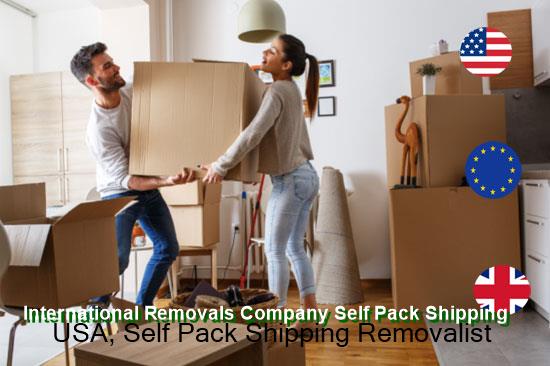
It changes the price, because packing labour is a significant part of an international quote and you are removing it. That saving is real and it is why people do it.
It changes the insurance position, because an insurer cannot assess how a sealed carton was filled. Expect a higher excess on your own boxes, or cover limited to specific events rather than all risks.
It changes who writes the inventory. On a full pack the crew lists as they go, to a standard they use every week. On a self pack that job is yours, and it is the document US customs reads.
| ❗ | Small boxes for heavy things, large boxes for light things, never the reverse. |
| ❗ | Fill every box completely, because half empty boxes collapse when stacked. |
| ❗ | Wrap fragile items individually and leave space around them for movement. |
| ❗ | Tape the base as well as the top, along the seam and across it. |
| ❗ | Label by contents rather than by room, on the side rather than the top. |
| ❗ | Keep liquids, aerosols, perishables and anything flammable out entirely. |
Export cartons are rated for stacking in a container for weeks. Used grocery boxes are not, and they fail from the bottom.
Not afterwards from memory. Contents by box, in words a customs officer could verify.
Part packing exists for exactly this. The saving on glass and art is small and the risk is not.
Enough to be worth considering, because packing labour is a significant share of an international quote. Ask for both options to be priced so you can see the actual figure.
Because nobody can verify the contents or the packing method once a carton is sealed. Cover is usually narrower or carries a higher excess as a result.
Yes. That is part packing, and it is a sensible middle ground where the crew handles fragile items and you do the books and clothes.
Export rated cartons, which are built for stacking in a container for weeks. Used supermarket boxes fail under that load.
By contents, box by box, as you pack. US customs will not accept miscellaneous, and a vague inventory raises the chance of an inspection you pay for.
Glass, mirrors, art, electronics and anything awkwardly shaped. The saving is small and the risk is not.
Only if it is not finished when the crew arrives. Agree the deadline and work back from it, because a part packed house on collection day costs time.
They will note them as owner packed, which is what the insurance position rests on. They will not open and repack them.
From the moving company, usually. Export rated boxes are built for stacking in a container for weeks, which supermarket boxes are not.
Send your collection address, your US destination, the move date and a rough inventory, and ask for self pack, part pack and full pack to be priced. A moving company from our network takes it from there.
A Working Member of AGM Group. Enquiries are connected with vetted FIDI FAIM certified and BAR Overseas accredited international moving companies from the network.
We are an enquiry service rather than a packing firm. Packing standards and insurance terms are set by the moving company you are introduced to.
Written by Darren Benjamin, Founder.