15
Years in international removals
850k+
Verified customer enquiries
3
FIDI-accredited partners
Trusted International Moving Network
Accredited Relocation Specialists


A removal from Belgium to Canada travels by sea. International movers ship from the Port of Antwerp-Bruges. It is one of Europe's two largest shipping ports. It sits less than an hour from Brussels or Ghent. So it is the usual start point. Your goods are collected from your Belgian address. They are packed into a shipping container. Then they are loaded at Antwerp for the North Atlantic crossing.
Regular container services run from Antwerp to Montreal and Halifax on the Atlantic coast. Others run to Vancouver on the Pacific. From Montreal and Halifax, your goods go inland by rail or road. They reach Toronto, Ottawa or other towns in Ontario or Quebec. The sea crossing takes about three to four weeks to the east coast. Vancouver takes four to five weeks.
A full 20-foot or 40-foot container is the most common option for a family move. A shared load suits a small flat, a student move or a few rooms. It is called LCL, or less than container load. Your goods share a container with other shipments to the same place. Movers use LCL often. It fits moves where a full container would be wasteful. It costs less but adds time while the container fills.
We connect your request with one FIDI-certified partner mover for the Belgium to Canada route. One contact. One clear plan from packing in Belgium to delivery in Canada. Free, no obligation.
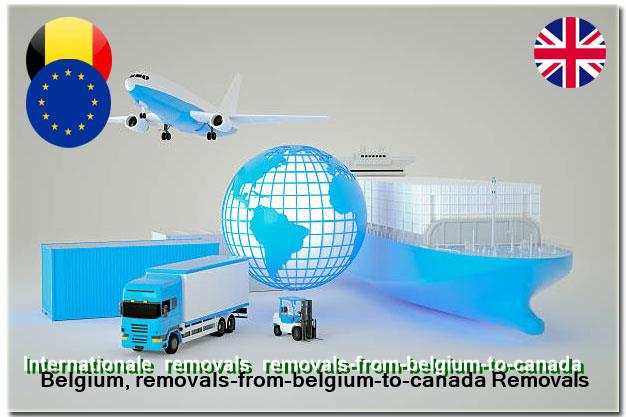
International movers handle the full range of household goods on the Belgium to Canada route. The same sea freight method applies to any move. That covers a family home, a student flat or a few items of furniture. The difference is the container size and whether you share space with other customers.
Removal companies often ship the following from Belgium to Canada:
A student move or a small single flat usually goes as a shared container load (LCL). International shipping companies consolidate several small moves into one container heading to the same Canadian city. Items commonly shipped on student and small moves include:
A shared load for a student move usually costs 2,500 to 4,000 euros. The price depends on volume and place. Your mover confirms after reviewing the full item list.
We connect removals from any part of Belgium to any part of Canada. That covers Flanders, Wallonia, Brussels and the German-speaking east. Whether you are in Antwerp, Liège, Ghent or a smaller town. One enquiry reaches a FIDI-certified partner mover. They plan the full route from your Belgian door to your Canadian address.
Canada is enormous. The place determines the shipping route, the entry port and the inland delivery plan. Here are the ten areas we most commonly serve from Belgium:
Not seeing your place? We handle moves to all Canadian provinces and territories. Tell your mover the full delivery address, province and postal code. That sets the port, the shipping line and the inland plan.
Canada is not in the EU customs area. Moving from Belgium to Canada is a non-commercial import regulated by the Canada Border Services Agency (CBSA). All household goods entering Canada must be declared and cleared, even if you qualify for duty-free status.
Most people moving for good to Canada can import their personal things duty-free under the settler's effects concession (Tariff Item 9807.00.00). To qualify, you must be settling in Canada from another country. You must have owned and used the goods before you arrived. They must reach Canada within a short time after you do. New items, alcohol and tobacco are excluded.
Form B4 (Personal Effects Accounting Document) is the key document. You complete Section A before your goods arrive. It lists every item in the shipment, their approximate value and their country of origin. Your FIDI-certified mover helps you fill in the B4 form. They submit it to CBSA at the Canadian port of entry.
Belgian export rules for personal things are straightforward. Antwerp customs handle outbound container clearance as part of standard loading. Your mover coordinates this at the Belgian end.

CBSA clearance at the Canadian port usually takes two to five working days. Peak seasons (summer) can slow this. Your mover builds clearance time into the delivery schedule.
Never ship goods before your Form B4 is ready. Incomplete declarations can delay release and trigger inspection.
Belgium to Canada is a long-haul sea freight move. Whether you are shipping a full family home, a furniture-only consignment or a student flat, costs are higher than EU routes because of the ocean crossing, container fees, port handling at Antwerp and CBSA clearance at the Canadian end.
As a rough planning guide, a shared container load (LCL) for a small flat usually falls between 2,500 and 5,000 euros. A full 20-foot container for a two to three bedroom home runs from around 5,000 to 9,000 euros. A 40-foot container for a larger home can reach 10,000 to 14,000 euros. These are estimates only. Your mover quotes a firm price after reviewing the inventory, route, port fees and insurance.
The main cost drivers are the volume of goods, the place port and province, insurance level, packing materials and the speed of CBSA clearance. Summer is peak season. Book early.
Belgium uses the euro (EUR). Canada uses the Canadian dollar (CAD). Your removal quote will be in British pounds sterling or euros. Once you arrive in Canada you will be working in Canadian dollars. This means the euro-to-CAD exchange rate affects what you spend in Canada.
As part of the services available through International Removals Companies, we can connect you with currency exchange partners who specialise in international transfers. If you need to convert euros or pounds into Canadian dollars, whether for your first rent payment, a property deposit or day-to-day settling-in costs, ask when you enquire. we can refer you to a currency exchange partner. We don't provide currency exchange ourselves and we don't recommend specific rates. But connecting you with a specialist is part of what we offer alongside the removal.
These are rough planning figures only. Not fixed prices, live offers or guaranteed quotes. Your mover confirms the firm price after reviewing the inventory, access and route.
Belgium to Canada is a specialist route. House removals, furniture shipping and student moves across the North Atlantic all need a mover who understands Antwerp container logistics, North Atlantic shipping lines, CBSA Form B4 requirements and inland Canadian delivery. Overseas removals companies with experience on this corridor handle the process differently from a short EU road move. Get one that has done it before.
We connect you with one FIDI-certified partner mover experienced on this route. FIDI FAIM accreditation means the mover has passed an independent Ernst and Young audit covering more than 200 quality criteria. That includes overseas packing standards, documentation accuracy and overseas delivery practices, all of which matter on a six-to-ten-week intercontinental move.
They handle container booking at Antwerp, the bill of lading, the Form B4 submission, CBSA clearance, inland delivery and unpacking at place. Family house removals, furniture-only moves and student shipments are all handled on this route. International removal companies with Belgium to Canada experience manage every leg. One point of contact from Belgium to Canada.
Yes. Canada is outside the EU, so your household goods are a non-commercial import. The Canada Border Services Agency (CBSA) needs a completed Form B4. It is Personal Effects Accounting Document covering all goods you are bringing in. Your FIDI-certified mover prepares the paperwork and manages clearance at the Canadian port of entry.
You can import most personal things duty-free under the settler's effects concession. This applies if you are setting up permanent residency in Canada. You must have owned and used the goods before arriving. And they must arrive within a short time of your own arrival. New goods, tobacco and alcohol don't qualify. Your mover confirms eligibility when you enquire.
By sea freight. Household goods, furniture. student moves all travel in shipping containers loaded at Antwerp port, one of Europe's largest shipping ports. The container crosses the North Atlantic. Transit is usually four to six weeks to Toronto, Montreal or Vancouver. A shared container (LCL) suits smaller moves and student shipments and costs less than a full container.
Allow six to ten weeks door to door. Sea transit from Antwerp to Montreal or Halifax takes roughly three to four weeks. Toronto and Vancouver can add another week. Add packing, container loading, port clearance and inland delivery at the Canadian end. A full container is generally faster than a shared load.
A shared container load (LCL) for a small flat usually costs between 2,500 and 5,000 euros. A full 20-foot container for a two to three bedroom home runs from roughly 5,000 to 9,000 euros. A 40-foot container for a larger home can reach 10,000 to 14,000 euros. These are rough planning figures. Your mover quotes a firm price after a survey.
Form B4 is the CBSA Personal Effects Accounting Document. It lists every item you are bringing into Canada as a settler. You complete Section A before goods arrive and declare items already in Canada or arriving later. Your FIDI-certified mover guides you through the process. submits the form on your behalf at the port of entry.
Yes. The Port of Antwerp-Bruges is one of Europe's two largest container ports. Regular container services run from Antwerp to Montreal and Halifax. They also serve Toronto, via the St Lawrence Seaway, and Vancouver. Your mover in Belgium books the container and freight directly from Antwerp. This keeps the inland leg short.
Yes. You can ship a vehicle from Antwerp too. It can go in a container with your goods, or as a separate roll-on roll-off shipment. Canadian import rules for vehicles include a safety and emissions check. The car must meet Canadian Motor Vehicle Safety Standards. Your mover can advise on the best method and what documentation CBSA needs.
International Removals Companies is not a removal company. We are a free matching service operated by DATACONTEXT (UK) LTD (company 07425576). You send one request. We connect you with one FIDI-certified partner mover experienced in the Belgium to Canada sea freight route. We can also connect you with currency exchange partners for euro to Canadian dollar conversions. Free, no obligation.
Send your Belgian collection address, the Canadian delivery address and province, your room list and preferred move date. One FIDI-certified partner mover confirms the container size, shipping route, customs plan and firm price. Free, no obligation.
Get a Free Belgium to Canada Removals QuoteFree. One FIDI-certified partner mover. DATACONTEXT (UK) LTD, operating since 2010.
Give us the two addresses, a rough idea of your load and your date. A minute is all it takes.
We find one vetted mover for your route. Just one. They ring you and give a clear quote. There is no fee to you.
They wrap and pack, load the van, cross the Channel and deliver to your door in Belgium.
The customs paperwork is theirs to file, not yours. FIDI FAIM means they have passed a tough audit. Your move is in good hands.
Planning is what makes a move calm. Your mover sorts the crossing and checks the roads at both ends. They come with sturdy boxes and good wrap. They pack, they load, they drive. You do not need to carry a single box.
Start with a free survey. The mover walks your home and notes what you own. That makes the quote solid and the day predictable. A video survey is fine too, if you cannot meet in person.
Think about your dates. The summer months are the busiest, so book early. A quiet week can bring the price down. Your mover knows the best time to travel your route. So do ask them. A bit of planning makes it cheaper.
Keep your papers in one folder. You will need them for customs. A list of what you own helps a lot. Note down what is worth a lot, like a laptop or a bike. Your mover will help you with the form.
Pack a small bag for the first night. Put in what you need at once. Think of your keys, your phone, your meds and a change of clothes. Tape your boxes well. Mark each box with the room it goes to. It makes the new place easy to set up.
Tell your mover about stairs, lifts and tight doors. Tell them if a big sofa must come apart. The more they know, the smoother the day. Ask any question you have. A good mover is happy to help. There is no silly question. A short call now saves time later.
Give us the two addresses, a rough idea of your load and your date. A minute is all it takes.
We find one vetted mover for your route. Just one. They ring you and give a clear quote. There is no fee to you.
They wrap and pack, load the van, cross the Channel and deliver to your door in Belgium.
The customs paperwork is theirs to file, not yours. FIDI FAIM means they have passed a tough audit. Your move is in good hands.
Planning is what makes a move calm. Your mover sorts the crossing and checks the roads at both ends. They come with sturdy boxes and good wrap. They pack, they load, they drive. You do not need to carry a single box.
Start with a free survey. The mover walks your home and notes what you own. That makes the quote solid and the day predictable. A video survey is fine too, if you cannot meet in person.
Think about your dates. The summer months are the busiest, so book early. A quiet week can bring the price down. Your mover knows the best time to travel your route. So do ask them. A bit of planning makes it cheaper.
Keep your papers in one folder. You will need them for customs. A list of what you own helps a lot. Note down what is worth a lot, like a laptop or a bike. Your mover will help you with the form.
Pack a small bag for the first night. Put in what you need at once. Think of your keys, your phone, your meds and a change of clothes. Tape your boxes well. Mark each box with the room it goes to. It makes the new place easy to set up.
Tell your mover about stairs, lifts and tight doors. Tell them if a big sofa must come apart. The more they know, the smoother the day. Ask any question you have. A good mover is happy to help. There is no silly question. A short call now saves time later.
Choose a date that works. Book your mover early. Summer fills up fast, so do not leave it late.
Check the big things fit. Measure the sofa and the bed. Note the door size, the stairs and the lift.
Get your papers ready. You will need your passport and proof of both addresses. These help with customs.
Cut down what you take. The less you move, the less you pay. Sell or give away what you will not use.
Mark each box with its room. Pack a bag for the first night. It makes the new place quick to set up.
Here is the short story. Your things are packed in Belgium. They go in a box-like steel container. The container is loaded at Antwerp. A ship takes it across the sea to Canada.
You can share a container to save money. Or you can book a whole one for a big home. The mover helps you pick. They book the ship and handle the forms.
At the other end, your goods clear customs. Most people pay no duty when they move for good. The mover fills in the Form B4 for you. Then your things travel on to your new home.
It takes a few weeks by sea. So plan ahead. Pack a bag of what you need first. Send the rest by ship. Ask the mover any question. They do this every week.
International Removals Companies connects removals from Belgium to Canada enquiries with one suitable vetted partner mover. Partner movers hold FIDI FAIM, BAR Overseas, FEDEMAC and IAM accreditations where confirmed. Working Member of AGM Group since 2010.
Prices, transit times, insurance cover and customs paperwork must be confirmed by the partner mover before booking.